[ad_1]
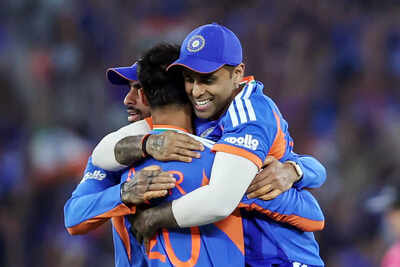
After breaking a decade-long title drought with the 2024 T20 World Cup win, India went all in with a modern, aggressive T20 identity. After veterans like Rohit Sharma, Virat Kohli and Ravindra Jadeja stepped away, the think-tank designed a younger, braver side in which roles rather than reputations held sway. The subsequent two-year stretch was marked by inflection points in leadership, selection and tactics. TOI decodes what went into India’s transition from a powerhouse of individuals to a relentless T20-winning machine…Go Beyond The Boundary with our YouTube channel. SUBSCRIBE NOW!MOVING ON FROM HARDIK PANDYA AS CAPTAINCY OPTIONHardik Pandya was long considered the heir apparent to the T20 throne but the shift away from his leadership was a strategic pivot towards stability. One, his fitness was dodgy. Secondly, freeing him up from captaincy duties allowed him to grow into the role of the side’s primary allrounder. This allowed India’s most valuable allround asset to stay physically and mentally fresh for high pressure situations.
APPOINTING SURYAKUMAR AS T20-ONLY CAPTAINHanding the T20 captaincy to Suryakumar Yadav, a one-format player, was a bold strategic move. It marked a clear shift toward format specialisation, ensuring leadership continuity in the shortest format. Known for his fearless batting and innovative mindset, Surya embodied the modern T20 philosophy India wanted to adopt. His leadership emphasised intent, aggressive Powerplay batting and tactical flexibility with bowling changes. With his appointment, India created a structure where decisions were driven purely by T20 demands.
Poll
Do you agree with India’s decision to drop Shubman Gill for a more aggressive approach?
DROPPING SHUBMAN GILL FOR INTENT-BASED SELECTIONShubman Gill’s exclusion was perhaps the loudest statement of the new era. Despite his technical brilliance and ODI dominance, his ‘classical’ approach was deemed too conservative. The management prioritised strike-rates over averages. By moving on from Gill, India sent a clear message that pedigree alone wouldn’t guarantee a spot. This paved the way for a more explosive, though volatile, top order in the form of Abhishek Sharma, Sanju Samson and Ishan Kishan.BACKING SANJU SAMSON AS ROHIT’S REPLACEMENTReplacing a titan like Rohit Sharma was no small feat but Sanju Samson’s like-for-like elevation worked wonders. While initially facing familiar ‘inconsistency’ labels, the batter delivered just when it mattered most, justifying the management’s decision to stick by him through the lean patches. Reintroducing him as a primary aggressor during the World Cup provided India with a ’keeperbatter who could exploit the Powerplay better than most. His ability to hit good balls for boundaries changed the team’s offensive baseline, turning him from a backup option into the indispensable tactical heartbeat.MAINTAINING LEFT-RIGHT BATTING COMBINATIONSOne of the tactical commitments from India was to maintain the leftright combinations throughout the batting order. Pairings such as Abhishek Sharma with Sanju Samson at the top, followed by Ishan Kishan and Suryakumar Yadav ensured bowlers rarely settled into rhythm. Later partnerships involving Shivam Dube and Hardik Pandya continued the pattern. The constant change of angles disrupted field placements and bowling plans. By structuring the lineup around alternating batting hands, India added a tactical layer that increased scoring opportunities and forced opponents to continuously adjust match-ups.BACKING SPECIALIST FINISHERSIndia placed greater emphasis on specialist finishers rather than relying solely on top-order dominance. Players like Shivam Dube and Rinku Singh were groomed for clearly defined late overs roles. Their job was not to anchor the innings but to maximise scoring in the final five overs against pace and spin alike. This shift recognised a key modern T20 reality that games are often decided in the final phase.INCLUDING MULTIPLE ALLROUNDERSAllrounders became central to the squad composition, providing flexibility in both batting depth and bowling options. Players like Hardik Pandya, Shivam Dube, Axar Patel and Washington Sundar allowed India to extend the batting lineup without compromising bowling resources. This multi-skilled approach made tactical adjustments easier, particularly on different pitches and conditions. It also helped captain Suryakumar to react dynamically to match situations, ensuring that the side maintained balance even while fielding aggressive batting combinations.
[ad_2]
Source link