
[ad_1]
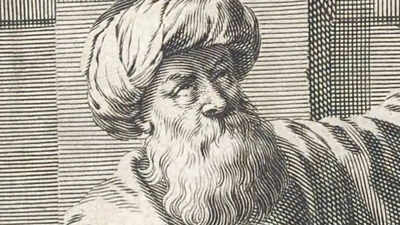
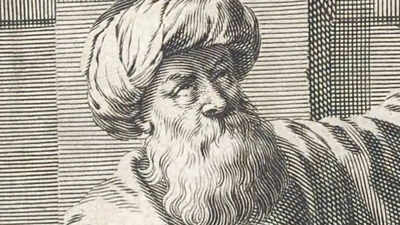
Several years ago, a historian working through a collection of old documents noticed something strange. The same story appeared in book after book, article after article. It had been repeated so often that nobody seemed to question it anymore. Yet when he traced the claim back to its original source, the trail led to a misunderstanding that had occurred generations earlier. The “fact” had survived because people trusted the writers who came before them. Each author assumed the previous one had already done the checking.The incident was hardly unique. Similar examples appear throughout history. Errors are copied. Assumptions harden into accepted wisdom. Opinions acquire the status of facts simply because they have been repeated long enough.That reality helps explain why the words of Alhazen still feel remarkably fresh despite being written centuries ago. Living during the medieval period, he developed a reputation as one of the great intellectual figures of his age. Yet his most valuable lesson may not have been a scientific discovery at all. It was a habit of mind. He believed that anyone genuinely interested in finding the truth must be prepared to question even the sources they admire.
Quote of the day by Ibn al-Haytham
“If learning the truth is a scientific’s goal, then he must make himself the enemy of all that he reads.”
What is the meaning of the quote by Alhazen
The quote can sound harsher than it really is.When Alhazen spoke about becoming “the enemy” of what one reads, he was not encouraging hostility towards books or learning. Quite the opposite. He spent much of his life studying the work of earlier thinkers.What he opposed was unquestioning acceptance.There is a temptation, especially when reading a respected authority, to assume that the difficult thinking has already been done by someone else. The reader becomes a receiver rather than an investigator.Alhazen resisted that approach.He believed every claim deserved examination. A respected scholar could be mistaken. A famous book could contain errors. An idea repeated for centuries could still be wrong.The responsibility of a serious thinker, in his view, was not merely to collect information but to test it.
The courage to doubt
Doubt often receives bad publicity.In everyday conversation, people tend to associate doubt with uncertainty, weakness or indecision. Yet intellectual history tells a different story.Many important advances began when somebody became dissatisfied with an accepted explanation.A physician questioned conventional medical beliefs. A scientist challenged an established theory. An explorer doubted a map.Those moments rarely begin with certainty. They begin with curiosity mixed with scepticism.Alhazen understood this. He recognised that progress depends upon people being willing to ask uncomfortable questions. If everyone accepts inherited ideas without examination, knowledge becomes stagnant.Questioning is not the enemy of learning. In many cases, it is the engine that drives learning forward.
Why is this quote important in modern life
Although Alhazen lived long before the digital age, his observation feels particularly relevant today.Most people now carry access to enormous amounts of information in their pockets. News updates arrive continuously. Opinions travel across the globe within seconds. Articles, videos and social media posts compete constantly for attention.The challenge is obvious. Access to information has become easier. Evaluating information has become harder.A claim may appear convincing because it is shared widely. A statement may sound authoritative because it is presented confidently. Neither guarantees accuracy.The modern reader faces a task that Alhazen would instantly recognise: separating evidence from assumption.That process requires patience. It also requires the willingness to remain unconvinced until the facts have been examined.
How to apply this quote in daily life
Most people will never conduct scientific experiments or publish academic research. Nevertheless, the principle behind the quote can influence everyday decisions.Consider how often people encounter information that aligns perfectly with their existing views. The natural reaction is agreement.Critical thinking asks for something more. It encourages a brief pause. Where did this information originate? Is there evidence behind it? Are alternative explanations available? These questions do not require specialised expertise. They require attentiveness.Over time, that habit can improve judgement in countless areas of life, from understanding current events to making personal and professional decisions.
Why great thinkers remain willing to change their minds
One of the most difficult lessons in intellectual life is accepting the possibility of being wrong. Most people enjoy being correct. Few enjoy discovering that a cherished belief needs revision. Yet the history of knowledge is, in many respects, a history of corrections.Old explanations are refined. New evidence emerges. Better ideas replace weaker ones. The individuals who contribute most to learning are often those who care more about discovering the truth than defending a position.Alhazen belonged firmly in that tradition.His quote reminds readers that loyalty to evidence should outweigh loyalty to assumptions.
A lesson that outlived its century
Many famous quotations survive because they are memorable. Far fewer survive because they remain useful.This one does both.Its endurance reflects a problem that every generation encounters. People want reliable knowledge, yet they are also vulnerable to habit, authority and repetition. The same forces that influenced readers a thousand years ago continue to influence readers today.Technology has transformed how information travels. Human nature has changed far less.We still prefer certainty to ambiguity. We still trust familiar sources. We still find comfort in ideas that confirm what we already believe.Alhazen’s advice cuts against those instincts.
Final thoughts on this quote
There is a quiet humility embedded in this quote. It assumes that no source, no matter how respected, deserves blind acceptance. It also assumes that readers themselves are capable of independent judgement.That belief may be Alhazen’s most enduring gift.He did not ask people to reject learning. He asked them to participate in it.Read widely. Listen carefully. Learn from experts. Then ask questions. Examine evidence. Remain willing to reconsider.Truth has rarely been kind to assumptions that go unchallenged. For centuries, progress has depended on individuals prepared to look at accepted ideas and ask a simple but powerful question: “How do we know?”
[ad_2]
Source link