[ad_1]
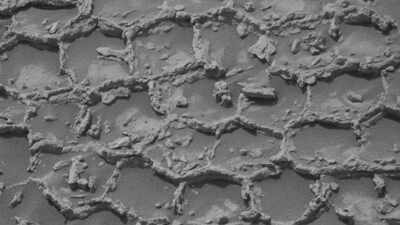
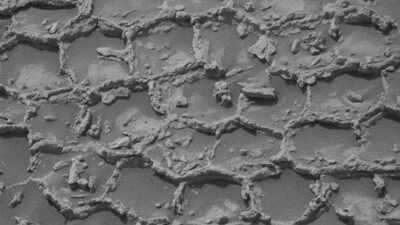
Space and its mysterious world never fail to surprise humans. According to the latest report, 14 years after touching down on the Red Planet, NASA’s Curiosity rover has snapped a photo of a mysterious honeycomb-like texture on the Martian surface, lending yet another mystery to an ever-expanding list of Martian geological features.NASA’s veteran Curiosity rover found a curious geological formation on Mars that has left scientists puzzled to understand its context. During its latest exploration inside Gale Crater, the rover photographed a striking honeycomb-like pattern etched into the planet’s surface—a discovery that researchers say was as surprising on the ground as it was from orbit.According to NASA’s blog, the rover team was surprised to see the unit covered with polygonal structures resembling the top of a giant Martian honeycomb. Driving further into the unit, the polygonal ridges were more eroded. Littered about this unit are pebble to cobble-sized dark-toned rocks.
A deeper look reveals an odd pattern
A still-to-be-resolved question is whether these are bits of Mars that “floated” down from higher in the stratigraphy, were ejected from distant impacts outside of Gale crater, or are meteorites from beyond Mars altogether, the blog states.Mission scientists said they were surprised by what they saw when they compared the close-up images to earlier orbital data.
What made the Honeycomb structure?
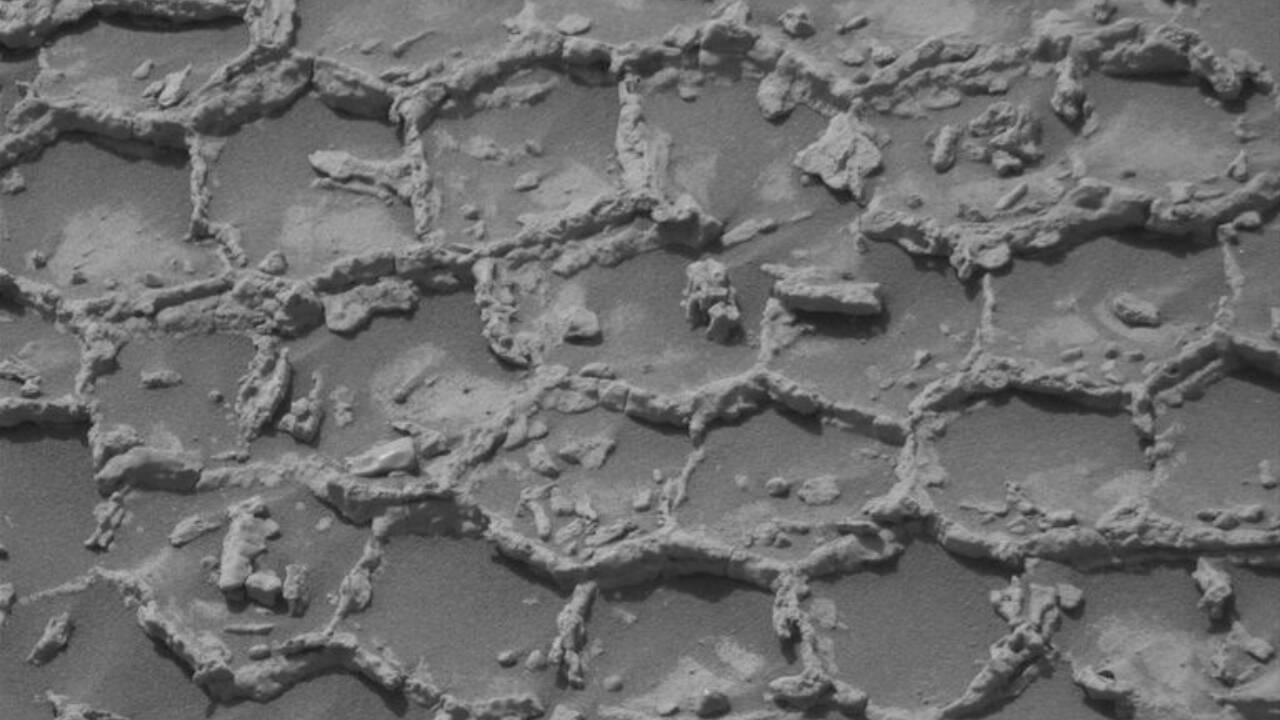
Scientists do not yet have a clear explanation for how the unusual formation came about. For the uninitiated, Mars has billions of years of eruptions, flowing water, shifting sediments, wind erosion and dramatic climate change. Any or all of these processes may have played a role in the formation of the polygonal structures.Similar geometric patterns can be formed on Earth through drying and cracking mud, crystallizing minerals, or the repeated freezing and thawing of the ground. It is not clear whether the Martian feature formed through similar geological processes – or something else entirely.Studying how the structure formed might give important clues about the environmental conditions that existed on the Red Planet.
The dark rocks bring another dimension of mystery
It was not only the honeycombed terrain that drew the attention of the researchers.After driving further towards the upper boundary of the light-toned, polygon-covered unit, the three-sol Friday plan included APXS and MAHLI measurements of another polygon ridge and one of the dark-toned cobbles, “Cortadera.” ChemCam LIBS also targeted “Cortadera” and a polygon ridge. ChemCam RMI targeted the top and base of the “Cordillera” mesa. Mastcam mosaics were planned for “Cordillera,” nearby troughs, part of the nearby “Valle Grande” channel, and documentation of LIBS targets and the Mastcam calibration target.Scientists have several theories under consideration. They could have broken off from higher geological strata and rolled downhill. They could have been tossed out by an ancient impact that created Gale Crater, or they could be meteorites that fell on Mars millions of years ago.Earlier rover missions found dark rocks on Mars containing minerals like nickel, a chemical element usually found in meteorites but relatively rare in Martian rocks. More work needs to be done to determine if the composition of the newly found stones is the same.
Why this discovery matters
Mars continues to surprise scientists even after decades of exploration. Since landing on the Red Planet in 2012, the Curiosity rover has been exploring Gale Crater, studying rock layers, ancient riverbeds, and mineral deposits to find evidence that Mars may have once had conditions suitable for supporting microbial life. The rover Curiosity has been roaming Mars for almost 14 years, yet it continues to make discoveries that challenge scientists’ understanding of the planet. For now the honeycomb-like landscape is one of Mars’ newest unsolved puzzles. And scientists will continue to study the images and geological data returned by Curiosity to determine whether the unusual polygons and the nearby dark rocks are connected or resulted from two separate geological events. As exploration of the Red Planet continues, discoveries like this remind us that Mars still holds many secrets.
[ad_2]
Source link