[ad_1]
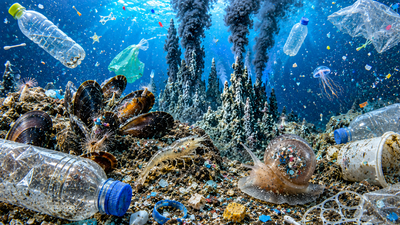
Scientists have uncovered plastic pollution in one of Earth’s most isolated environments, challenging the long-held belief that the deep ocean remains largely untouched by human activity. Analysing animals living more than 2,000 metres beneath the sea, researchers discovered that 92% contained microplastics, offering some of the clearest evidence yet that plastic waste has reached even the planet’s most remote marine ecosystems. The findings, published in the journal Water Research, also revealed a striking regional difference, with deep-sea animals collected from the Indian Ocean carrying significantly higher levels of contamination than those from the Pacific. The study raises fresh concerns about the growing reach of plastic pollution and its potential impact on fragile marine food webs.
Plastic pollution reaches the ocean’s deepest ecosystems
The study, published in the peer-reviewed journal Water Research, focused on hydrothermal vent ecosystems in the Central Indian Ridge and the North Fiji Basin. These underwater environments lie more than 2,000 metres (6,560 feet) below the surface and are among the most isolated habitats on Earth.Researchers from the Korea Research Institute of Bioscience and Biotechnology (KRIBB) examined deep-sea snails and mussels collected from these locations to determine whether microplastics had reached their bodies. Their analysis showed that 92% of the animals contained plastic particles, with an average of 3.4 microplastic particles per individual. The findings suggest that even ecosystems separated by vast ocean distances are no longer insulated from pollution originating at the surface. This highlights the extraordinary reach of plastic waste across the global ocean.
Indian Ocean animals were far more contaminated
One of the study’s most striking findings was the difference between the two sampling sites. Animals collected from the Central Indian Ridge in the Indian Ocean contained up to 14.7 times more microplastics than those collected from the North Fiji Basin in the southwestern Pacific.While the researchers did not identify a single reason for the disparity, they suggest that the Indian Ocean may receive larger amounts of plastic waste due to dense coastal populations, major shipping routes and river systems that transport debris into the sea. Ocean currents may then carry these tiny particles far from their source before they eventually sink to the seafloor.
Everyday plastic products are reaching the deep sea
The most frequently detected material was polystyrene, a plastic commonly used in disposable food containers, packaging, foam products and insulation materials. Scientists also identified several other synthetic polymers associated with everyday consumer and industrial products.The findings indicate that plastic discarded on land or released into rivers can travel remarkable distances. Instead of remaining at the surface, microplastics may become attached to organic matter, colonised by microorganisms or incorporated into marine snow before gradually sinking thousands of metres into the deep ocean.
The significance of hydrothermal vents
Hydrothermal vents are unlike most other ecosystems on Earth. Rather than relying on sunlight, they support life through chemosynthesis, where microorganisms convert chemicals released from the seafloor into energy.These unique environments are home to specialised animals such as snails, mussels, shrimp and crabs that have evolved to survive under extreme temperatures and pressures. Because hydrothermal vents are so remote and difficult to access, they have long been viewed as relatively protected from direct human impacts. Discovering widespread microplastic contamination in these habitats suggests that plastic pollution has spread far beyond coastal waters.The presence of microplastics in these isolated ecosystems is concerning because hydrothermal vent species play a vital role in deep-sea food webs. Previous studies have shown that microplastics can interfere with feeding, carry toxic chemicals and place physiological stress on marine organisms. As plastic pollution spreads into these remote habitats, scientists fear it could affect the health and stability of one of the world’s most unique marine ecosystems.
What are microplastics and why are scientists concerned?
Microplastics are plastic fragments smaller than 5 millimetres, produced when larger plastic items break down or released directly from products such as synthetic clothing fibres, industrial pellets and tyre wear.Previous research has shown that microplastics can accumulate in the digestive systems of marine organisms and may affect feeding, growth and reproduction. They can also transport harmful chemicals and microorganisms through marine environments. While the new study did not investigate the health effects on the animals themselves, the researchers say the widespread presence of plastics highlights the need for further monitoring of deep-sea ecosystems.
What the findings mean for the future
The deep ocean makes up nearly 90% of Earth’s marine habitat, yet it remains one of the least explored parts of the planet. The discovery of microplastics in nearly every animal sampled demonstrates that no marine environment is completely isolated from human pollution.The researchers say their findings provide some of the clearest evidence yet that plastic pollution from surface waters is reaching the ocean floor, including ecosystems once thought to be beyond humanity’s influence. They argue that reducing plastic waste entering rivers and oceans, while expanding international monitoring of deep-sea environments, will be essential to better understand and limit the spread of pollution across the world’s oceans.
[ad_2]
Source link