[ad_1]
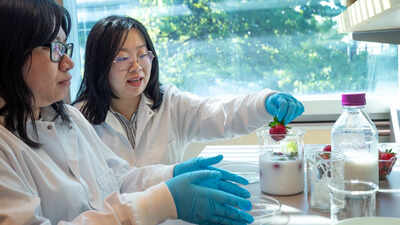
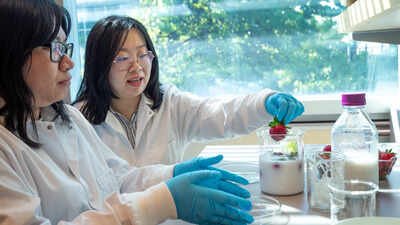
Everyone loves strawberries. Almost every city has its own version of eating this sweet, bright red fruit. In London, for instance, people often like to eat strawberries dipped in chocolate. In other places, they’re folded into fresh cream, blended into smoothies, or simply eaten as they are on a warm afternoon.But strawberries have a problem most of us are familiar with: they rot. It is one of the oldest problems in agriculture, and also one of the most expensive. In Canada, nearly half of all food produced is lost or wasted, costing the economy an estimated $58 billion annually, and fresh fruits sit at the centre of that crisis. Researchers at the University of British Columbia have now found something that can cut strawberry wastage. This simple method can keep strawberries fresher than they would be under refrigeration. The findings are published in the Journal of Agricultural and Food Chemistry.
They coated strawberries with a seaweed derivative
Pic credit: Clare Kiernan
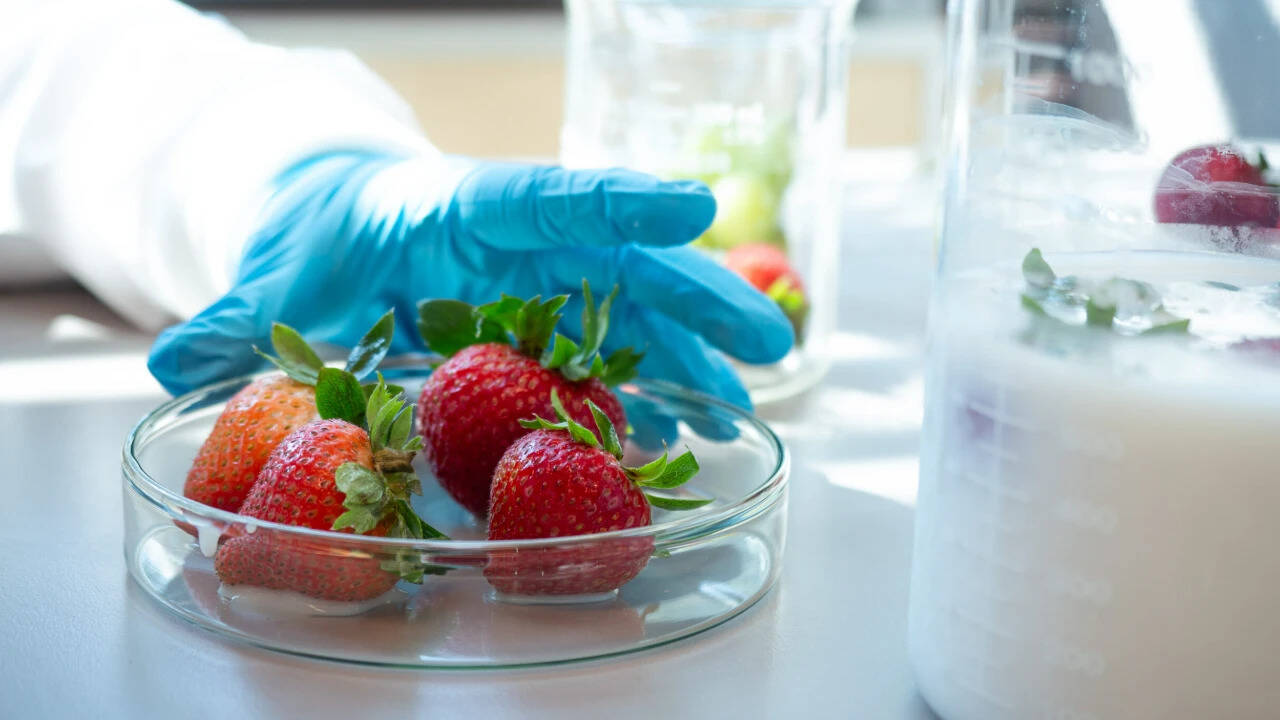
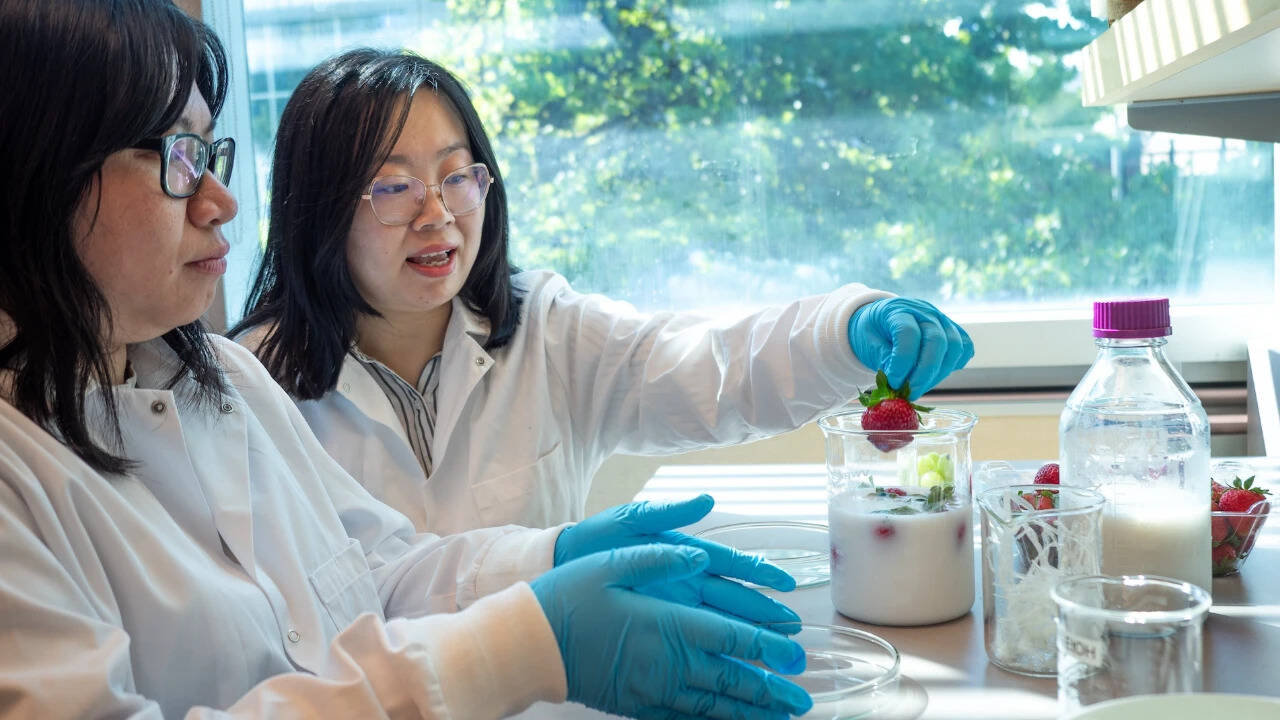
Researchers at UBC designed an agar-based coating that can help reduce food spoilage and waste, and is even more effective than refrigeration. They dipped strawberries in a seaweed-based coating, which can help them stay fresher at room temperature than their refrigerated counterparts. Uncoated berries stored at room temperature develop mould by day two. In the fridge, they can last until day four before deteriorating. For a supply chain built on the assumption that fresh produce requires refrigeration at every stage, these findings are significant.The researchers knew that maintaining cold temperatures from farm to warehouse, and from truck to grocery store, requires a significant amount of energy and infrastructure, especially in cases where fresh produce has to be transported over long periods of time.“We wanted to find a simple alternative to cold storage. Once we added the coating, the fruit became far less sensitive to changes in temperature and moisture and stayed fresh longer,” senior author Dr Tianxi Yang, an assistant professor in UBC’s Faculty of Land and Food Systems, said in a statement.
How the researchers used a familiar ingredient
Pic credit: Clare Kiernan
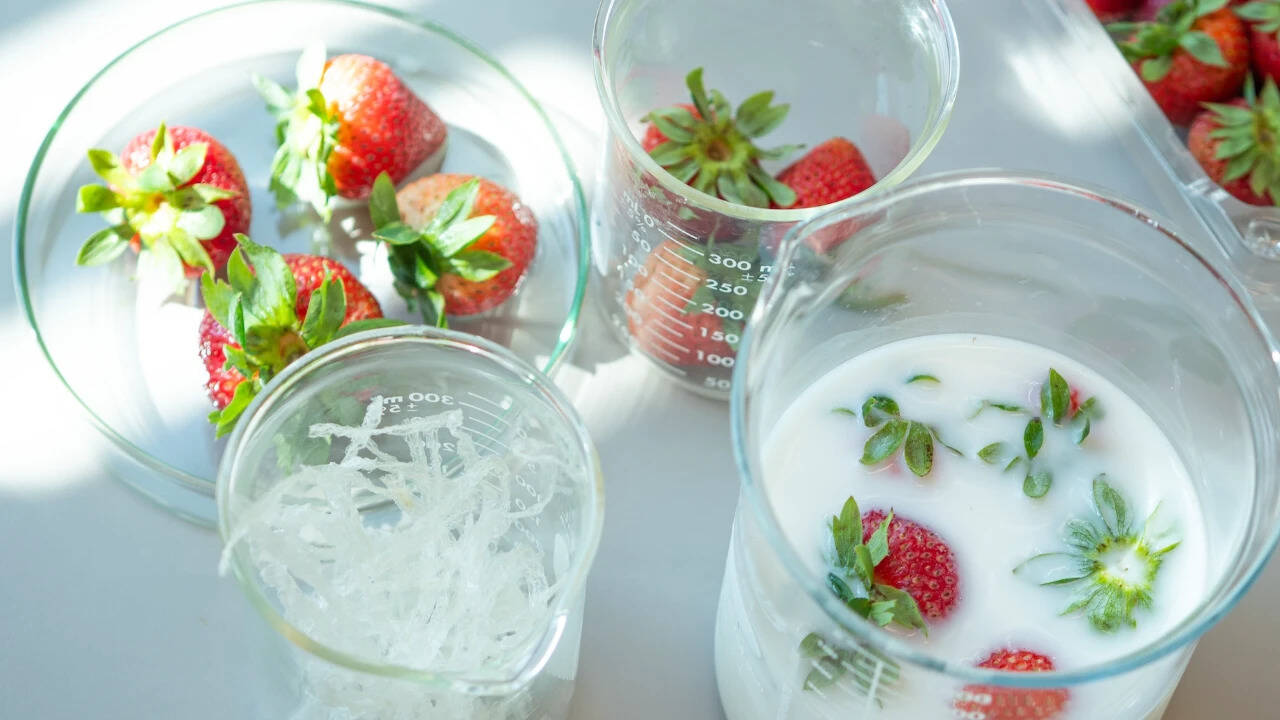
The formula sounds almost too ordinary. It is agar, a substance derived from red seaweed used in puddings and jellies. If used alone, agar forms a thick gel, so they mixed it with zinc, an essential nutrient, and tannic acid, a naturally occurring plant compound found in grapes and tea. This combination proved effective. When mixed together, these ingredients self-assembled into microparticles that created an invisible protective layer.The researchers dipped strawberries, grapes, and apple slices into this solution. A thin edible coating formed around the fruit, which was completely clear once dried.“It was exciting to watch the particles self-assemble in real time, from a cloudy, milky liquid into this incredibly uniform, protective layer,” doctoral student Ivy Chiu, the study’s lead author, said. “To our knowledge, no one had made an agar-based microparticle coating like this before.”No visible residue. No artificial appearance. The fruit simply stayed fresh for longer.
Fresher for longer, with a lower environmental footprint
Pic credit: Clare Kiernan
The researchers found that the strawberries stayed fresh for longer, and the benefits extended beyond moisture retention. Over four days, coated berries preserved significantly more vitamin C and antioxidants than uncoated ones. Grapes remained fresh for 14 days and apple slices for 24 hours. The coating also had antibacterial properties and showed no toxicity in tests using human intestinal cells. For those who are not comfortable eating it, the coating can be washed away; most of it rinses off with tap water in two minutes. This method also had a 14% lower carbon footprint than conventional refrigeration and reduced freshwater ecotoxicity by about 85%.Lab results do not always survive the transition to commercial production, so the researchers replaced their laboratory-grade agar with food-grade agar available at commercial scale. Yet the results remained consistent. Coated strawberries continued to show reduced moisture loss and spoilage while maintaining quality.“Our hope is to help keep produce fresh for longer throughout the food system. If we can reduce spoilage during storage and transportation, we can reduce food waste while using less energy to preserve food,” Dr Yang said.The researchers are now exploring whether this mixture also works for other fruits and vegetables.
[ad_2]
Source link