An international research team has identified a remarkable insect fossil from western Texas that could represent a crucial missing link in the story of insect evolution. The fossil, from the Late Mississippian period approximately 324 million years ago, belongs to a stem group of insects and may help scientists understand how these early insects transitioned from aquatic to terrestrial environments. Interestingly enough, the transition was a much slower process than previously believed. The researchers combined this discovery with previous fossils to better understand the evolution of insects. The findings are published in the journal Nature.
Early insects had six walking legs and paddle-like limbs
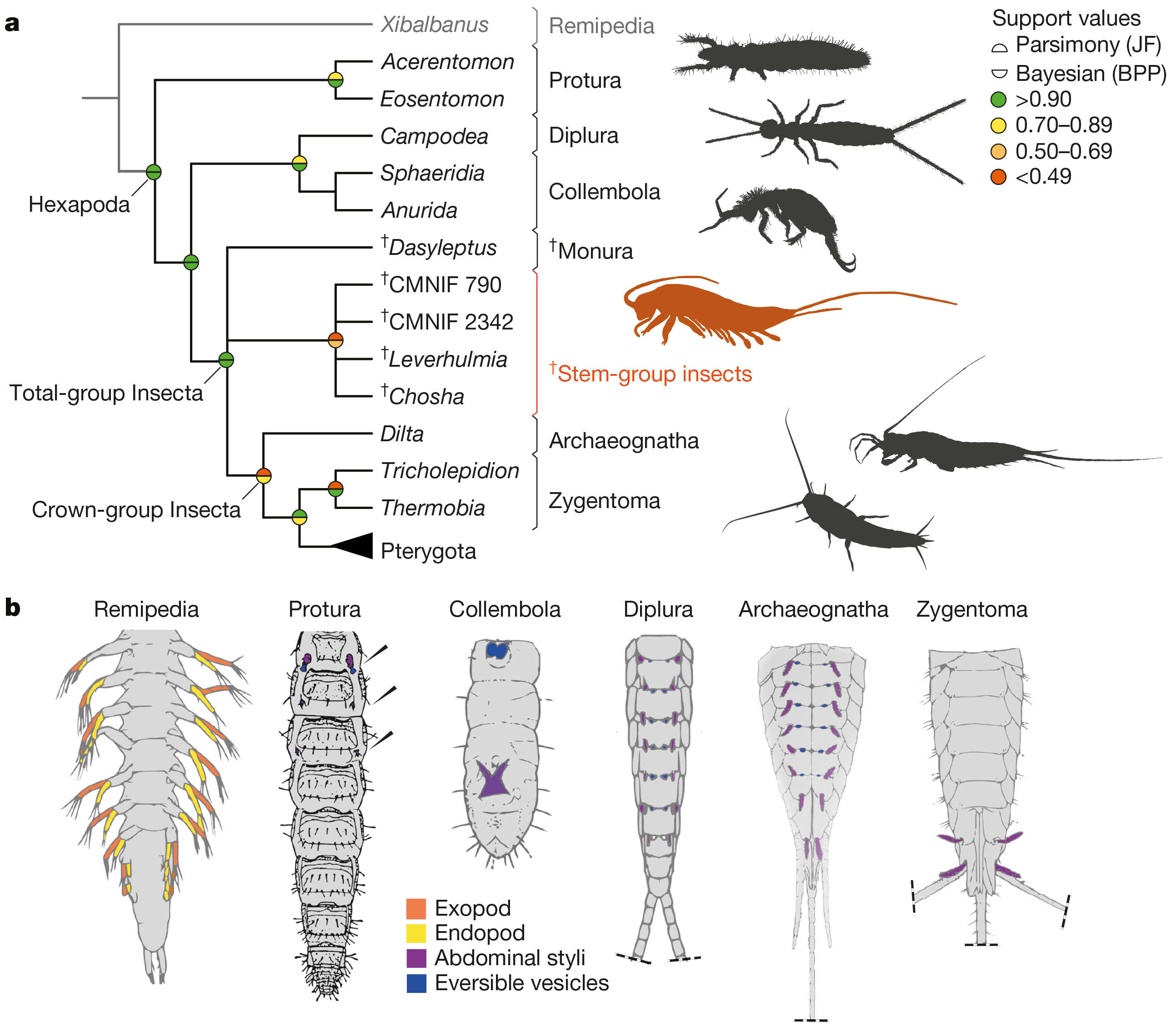
(Image by NIGPAS)
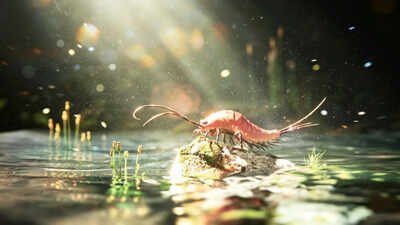
The new fossil suggests that insects did not immediately transform into fully terrestrial creatures after colonising land. The process was slower. They retained and remodelled ancestral aquatic features and passed through a semi-aquatic, amphibious phase before becoming fully terrestrial. The study was led by Professor CAI Chenyang from the Nanjing Institute of Geology and Paleontology of the Chinese Academy of Sciences (NIGPAS) and Erik Tihelka, a joint-training PhD student at the University of Cambridge, who collaborated with researchers from the United States, Spain and other countries.The study describes a new species, Chosha praecursor, that had a hybrid anatomy unlike any modern insect. Rather than the typical six legs that characterise today’s insects, this stem insect carried an extra 18 legs sprouting from its abdomen, with many shaped like paddles for swimming.The fossil was found in calcareous claystone concretions in the Tesnus Formation of the Marathon Uplift in western Texas. They preserve unusually fine anatomical details. With the help of cross-polarised light imaging, the researchers found that this fossil had been misclassified for years. These specimens were adult female insects rather than crustacean larvae.The insects were 32.09 millimetres long. They measured about 49.66 millimetres including their tail filament and two tail-like structures. Their bodies had a mix of typical insect features and primitive ancestral traits. The detailed analysis showed that C. praecursor had an ovipositor, a segmented body and six walking legs — the basic body structure of insects. However, their abdomens were unusual. The first nine abdominal segments had extra limbs, with the rear ones shaped like paddles. No living insect has similar abdominal limbs.The fossils were found in near-shore, shallow-water deltaic coastal environments. When read together with the animal’s anatomy, it is possible that C. praecursor lived an amphibious, semi-aquatic lifestyle in humid habitats along the boundary between water and land.This discovery fills a critical 80-million-year gap in the hexapod fossil record and suggests insects spent a prolonged period living between water and land before completely adapting to the terrestrial environment.
Solving the 80-million-year puzzle
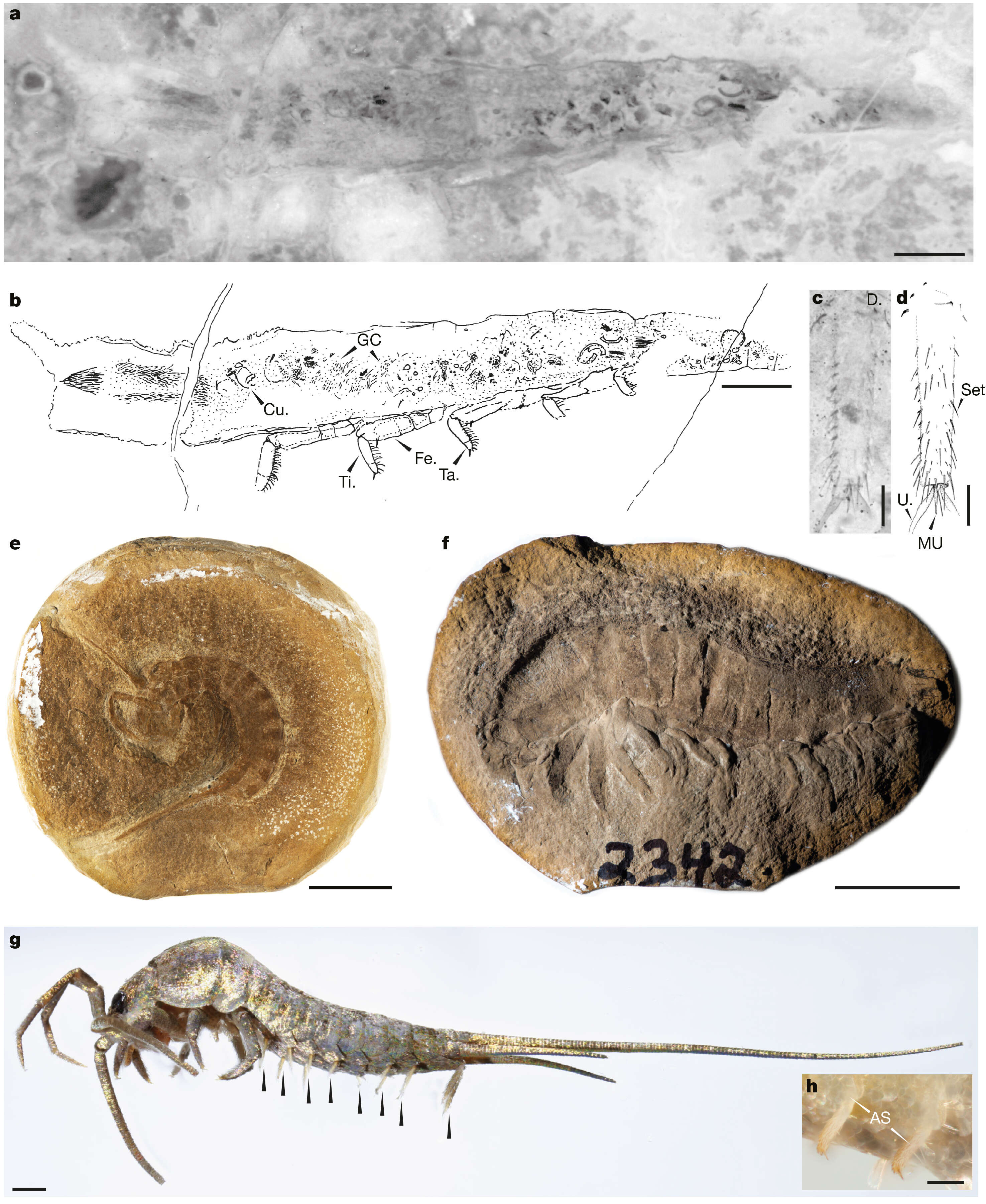
(Image by NIGPAS)
Molecular studies suggest hexapods (six-legged animals) diverged from their crustacean ancestors, yet fossil evidence did not confirm their existence until roughly 405 million years ago. This 80-million-year gap left palaeontologists deeply troubled. The newly found species and reassessment of three other ancient Paleozoic fossils from Scotland and Illinois, however, narrow that gap. These fossils provide direct evidence that insects underwent gradual transformation rather than sudden adaptation.
From water to land
Today, insects have six walking legs attached to the thorax. Most abdominal limbs have disappeared. The new fossils suggest that they gradually lost these abdominal limbs as they started to adapt to life on land. As insects evolved from their crustacean ancestors, their swimming limbs became less complex. They were eventually lost. Over time, this process led to the body structure that we see in modern insects. These fossils hence hold crucial clues as to how early aquatic ancestors evolved into land-dwelling insects.The new fossil’s paddle-shaped appendages show that they were still very dependent on aquatic or semi-aquatic habitats. The fossil also possesses a specialised ovipositor, indicating that early insects already had diverse reproductive strategies, which allowed them to lay eggs in a variety of microhabitats. This may have aided their adaptation to new environments and led to their subsequent diversification.