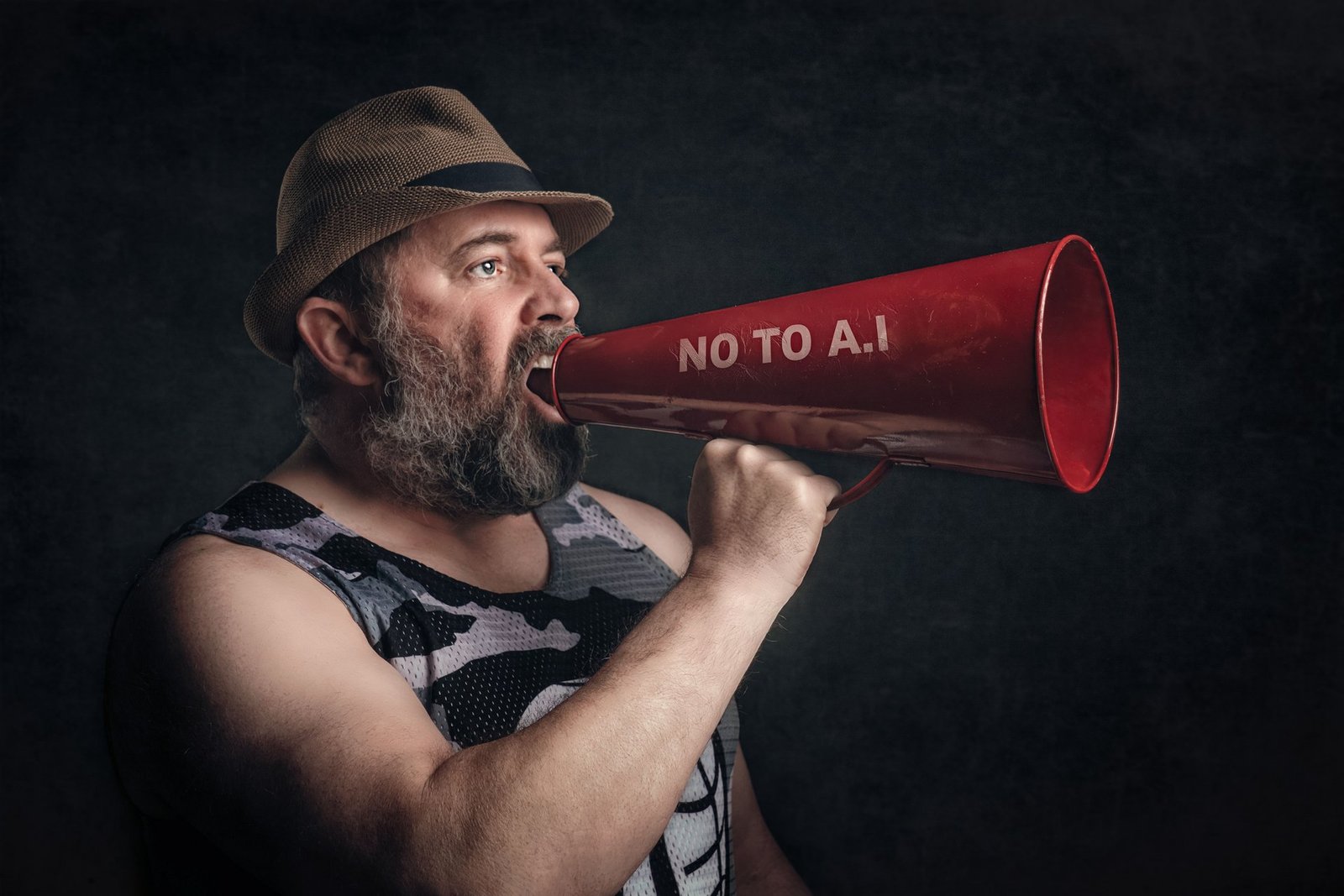
The ongoing debate about the future of artificial intelligence has taken a new turn, with increasing calls for a slowdown in its development. The conversation gained momentum at the first-ever AI safety summit held in November 2023 at Bletchley Park, where experts focused on the severe risks posed by advanced AI models. While some previously considered these threats as speculative, they are now becoming a pressing concern for many industry leaders.
Calls for Slowing AI Progress
Recently, Dario Amodei, head of AI company Anthropic, advocated for a deceleration in AI advancements. He was supported by notable figures such as Sam Altman of OpenAI and Elon Musk. This growing consensus among industry leaders reflects a shift in perception about the potential dangers of AI.
Jacob Coxon, a former researcher at Anthropic, expressed concerns to the BBC about the fear among developers regarding humanity’s future. Despite these calls for caution, implementing a slowdown presents substantial challenges.
Global Competition and Regulatory Challenges
The United States is wary of falling behind China in the race to develop the most advanced AI. President Trump recently asserted that the U.S. leads in this competition, emphasizing the strategic importance of AI dominance. However, the competitive landscape makes it difficult for any single company to halt progress without risking obsolescence.
Enforcing a slowdown raises questions about oversight and accountability. Proposals for independent monitoring and global regulation face skepticism about their feasibility. Ed Zitron, CEO of EZ Primary Research, expressed doubts about the practical implementation of these measures, highlighting the lack of a clear definition of what a ‘slowdown’ entails.
Economic Implications and Industry Dynamics
In the UK, AI is integral to economic growth strategies, especially in sectors like healthcare. However, the AI industry’s financial sustainability is under scrutiny, with reports of unmet expectations among firms adopting the technology. Economists predict a potential “bursting bubble,” leading to consolidation within the industry.
Companies like OpenAI pausing their IPO plans may indicate a shift towards prioritizing public safety over immediate financial gains. Yet, the uncertainty surrounding AI’s evolution complicates regulatory approaches, as noted by Alexander Voicu from Synthesia.
Concerns Over Corporate Responsibility
The debate extends to the ethical responsibilities of AI companies. Sasha Luccioni, founder of Sustainable AI, voiced concerns about corporate greed overshadowing existential risks. Professor Dame Wendy Hall likened the situation to a farmer neglecting to secure a bull, illustrating the need for robust AI safeguards.
Amid these discussions, some fear that excessive regulation could stifle innovation. Parker Thayer from the Capital Research Centre suggested a politically motivated agenda to “regulate AI into oblivion,” a view that highlights the polarized opinions on AI governance.
As the industry grapples with these challenges, its reputation may suffer lasting damage, raising doubts about the viability of investing in AI companies perceived as threats to humanity.