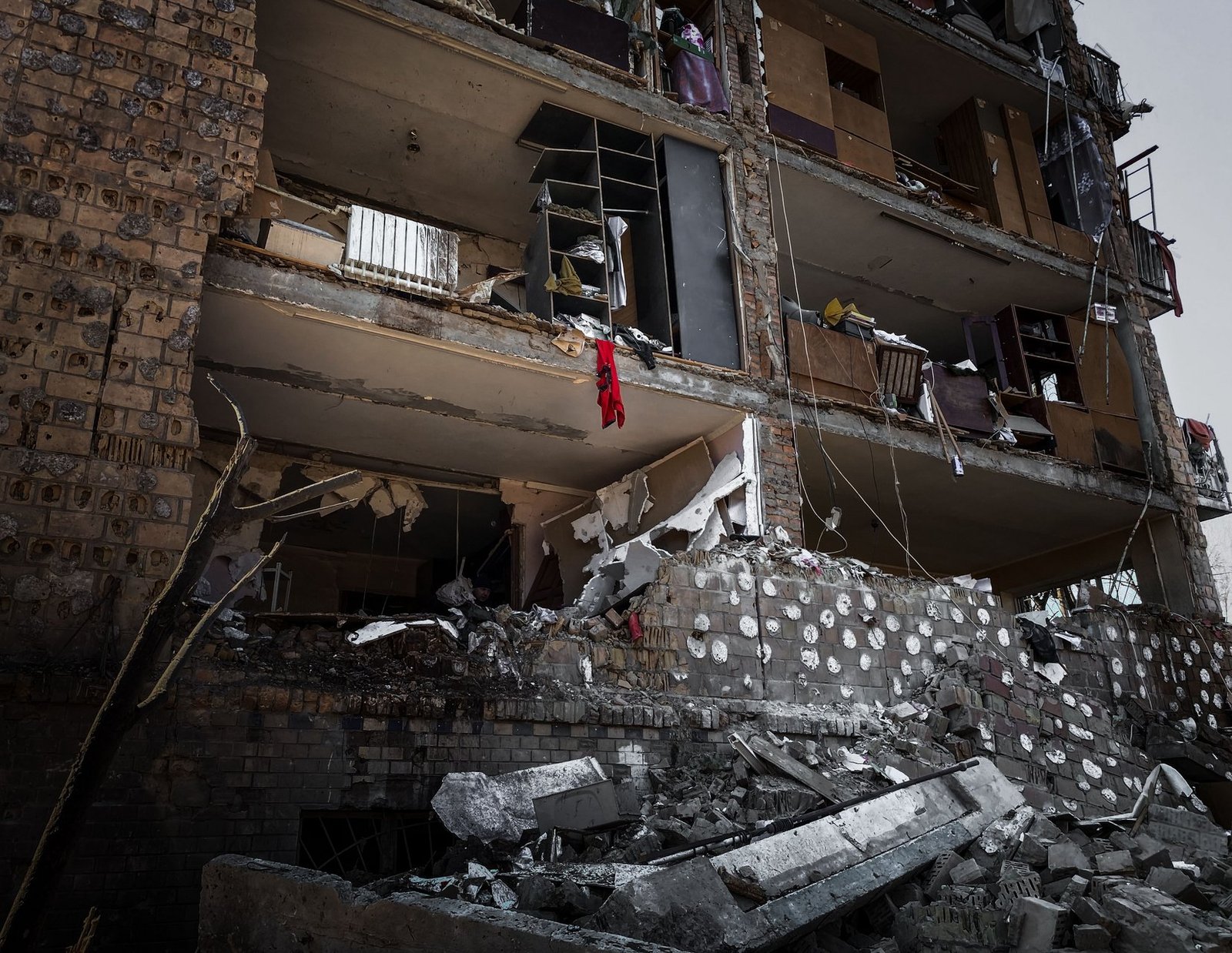
In the besieged city of Oleshky, located in Russian-occupied Ukraine, residents are facing dire conditions as they struggle to find basic necessities like food and water. The city, constantly under threat from shelling, has been isolated from essential supplies.
Tragic Losses and the Struggle for Survival
Recently, Halia, a resident of Oleshky, recounted the tragic deaths of two civilians who were killed by a drone while returning from Radensk with food supplies. The couple, known personally to Halia, failed to make it back before a curfew imposed by Russian forces. Their deaths have been confirmed by multiple sources, yet Halia remains cautious about revealing their identities due to safety concerns.
The city, a frontline location in southern Kherson, has been under Russian control since 2022. It is also one of the areas severely affected by the 2023 collapse of the Nova Khakova Dam, leading to extensive flooding. The Ukrainian government estimates that around 6,000 people, including 200 children, remain in Oleshky, down from its pre-war population of 24,000.
Humanitarian Crisis and International Response
With resources scarce, children in Oleshky suffer from malnutrition and lack access to education and medical services. The only hospital operates sporadically, mainly for critical amputations. Despite efforts, Ukraine has been unable to successfully deliver aid in recent months. In a recent UN General Assembly session, Ukraine’s Foreign Minister Andriy Sybiha urged for international pressure on Russia to allow humanitarian aid into the city.
In response to the crisis, the Kremlin acknowledged the severe shortage of food and medicine in Oleshky, attributing the situation to Kyiv’s actions. However, residents like Halia are left to fend for themselves, often resorting to eating garden weeds as a last resort.
Ongoing Dangers and the Toll of Conflict
The perilous conditions extend beyond food shortages. Many residents have attempted to leave the city on foot, despite the dangers of mined roads. The UN Human Rights Monitoring Mission has documented numerous civilian casualties in Oleshky and nearby Hola Prystan, though local volunteers believe the true numbers are much higher.
Ksenia Arkhipova, a volunteer who escaped Oleshky in 2022, has been tracking these deaths. She maintains a growing list of around 1,200 names of those killed, often updating it daily. The BBC has verified some of these accounts, including the story of Tetiana, who lost her parents to violence in the city.
Challenges in Honoring the Dead
Russian authorities have imposed restrictions on burying those killed in the conflict, requiring post-mortem examinations by Russian doctors, which are not feasible in Oleshky. This has led to bodies remaining unburied, some since December, either piling up in the powerless hospital morgue or being consumed by stray dogs.
These restrictions serve as a form of psychological warfare, according to Ester Vrataryova, co-founder of the charity Humanity. The situation in Oleshky remains dire, with residents living under constant threat and fear.