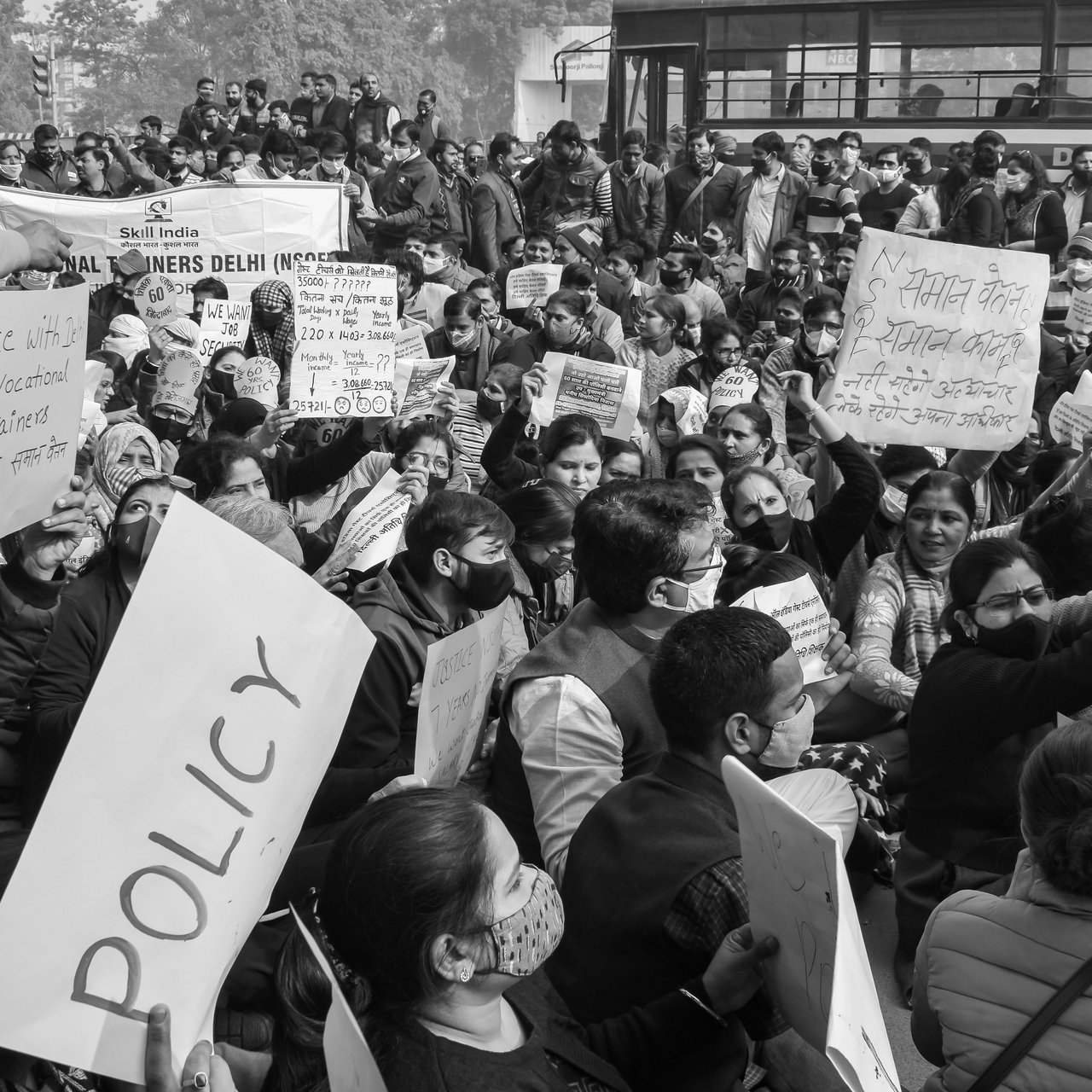
In a significant development regarding the planned protest by the Citizens for Justice and Peace (CJP), the Delhi Police have announced stringent restrictions on participation. CJP’s Abhijeet Dipke had called on the public to gather at Central Park in Connaught Place at 5 PM on October 16 for a demonstration. However, the police have stated that only eleven individuals will be permitted to carry the protest flag, limiting the assembly’s scale.
This restriction comes in the wake of a recent court ruling, which declined to prevent CJP from conducting the protest in the heart of the national capital. Nevertheless, the court mandated that the police take necessary measures to regulate the event. This has led to the current situation where the police are enforcing a limit on the number of participants who can visibly represent the protest.
Background of the Protest
The protest organized by CJP is part of a broader movement to raise awareness and promote discussions on various social justice issues. CJP has been vocal about advocating for the rights of marginalized communities and addressing grievances related to justice and equality in India. The planned assembly at Connaught Place, a prominent public space in Delhi, highlights the group’s intention to attract attention to their cause.
The announcement from Dipke aimed to galvanize support from the general public, encouraging citizens to join the movement and stand in solidarity with the issues being highlighted. The restriction imposed by the police raises questions about the freedom of assembly and expression, particularly in a politically sensitive environment.
Reactions and Implications
The limitations set by the Delhi Police have sparked a mixed reaction among various stakeholders, including civil rights activists, legal experts, and the general public. Many view the police’s decision as an infringement on the right to protest, which is a fundamental democratic principle. Critics argue that limiting the number of participants undermines the essence of a protest, which is to showcase collective dissent and solidarity.
On the other hand, law enforcement officials have stated that the restriction is necessary to maintain public order and ensure that the protest does not escalate into a larger confrontation. This tension between public safety and the right to protest is a recurring theme in political discourse, particularly in urban settings where large gatherings can lead to unrest.
Looking Ahead
As the date of the protest approaches, the situation remains fluid. It is expected that CJP will respond to the police’s limitations, potentially seeking to negotiate terms for a larger assembly or to challenge the legality of the restrictions in court. The outcome of this standoff could set a precedent for future protests in Delhi and beyond, especially regarding how authorities manage public demonstrations.
In the meantime, the police are likely to continue their preparations to ensure that the protest, albeit small in scale, proceeds without incident. Observers will be closely watching how this situation unfolds, as it reflects broader concerns about civic freedoms and the role of law enforcement in regulating public expression in India.
Source: NDTV India