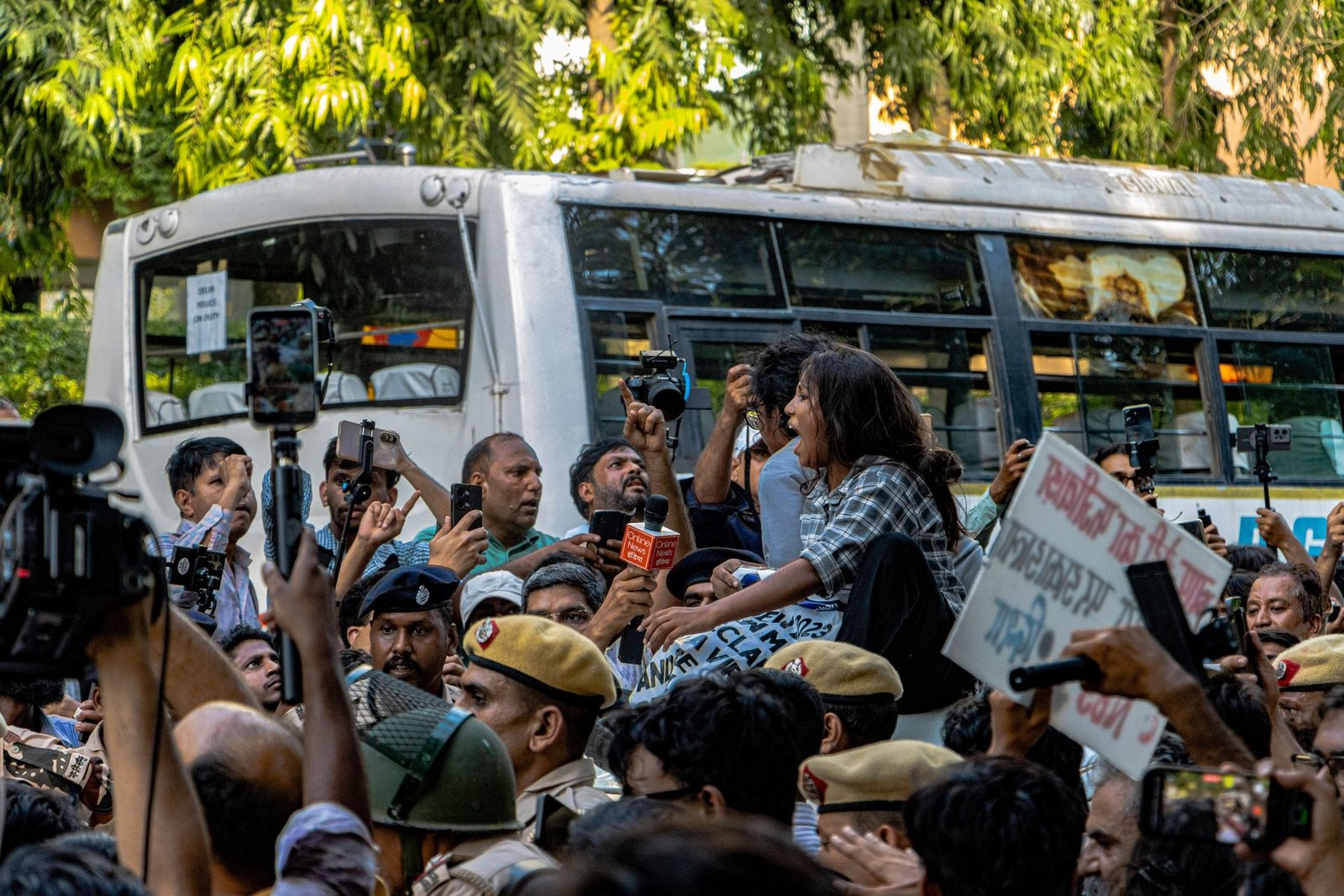
In a significant political development, leaders from various opposition parties have rallied behind Neha Bora and Abhijeet Dipke, two individuals facing legal scrutiny for allegedly waving the Indian national flag, referred to as the Tiranga. The incident has sparked a nationwide debate regarding the interpretation of patriotism and the legal boundaries surrounding the display of national symbols.
Opposition’s Unified Front
Arvind Kejriwal, the Chief Minister of Delhi and leader of the Aam Aadmi Party (AAP), has been particularly vocal in his support for Bora and Dipke. He has challenged the ruling Bharatiya Janata Party (BJP) by turning a popular phrase used against dissenters—”go to Pakistan”—back on them. Kejriwal questioned the rationale behind the legal implications of waving the Tiranga in India, stating, “If we don’t wave the Tiranga in our own country, will we in Pakistan?” This rhetorical question signals a broader critique of the current government’s stance on nationalism and public expressions of patriotism.
The support for Bora and Dipke has resonated across party lines, with several other opposition leaders joining in to emphasize that waving the national flag should not be criminalized. They argue that such actions are expressions of national pride and should be celebrated rather than condemned.
Legal and Political Implications
The case against Bora and Dipke has raised questions about the legal frameworks governing the display of national symbols. Critics of the BJP’s approach argue that the current legal interpretations may stifle individual expressions of patriotism, which are integral to the fabric of a democratic society. The incident has prompted discussions about the balance between national security concerns and the rights of citizens to express their loyalty to the nation.
As the opposition continues to voice its concerns, the BJP has remained largely silent on the specific allegations against Bora and Dipke. The lack of a strong rebuttal from the ruling party suggests a potential vulnerability in their position regarding freedom of expression, particularly in matters of national identity.
Next Steps and Public Response
The unfolding situation has galvanized public interest, with many citizens expressing support for Bora and Dipke through various social media platforms. These expressions of solidarity highlight a growing sentiment that the right to express one’s love for the country should be protected, irrespective of the political climate.
Looking ahead, the legal proceedings involving Bora and Dipke will likely serve as a litmus test for the current government’s stance on civil liberties and the interpretation of patriotism in India. As opposition parties prepare to challenge the actions of the ruling party, it remains to be seen how this situation will influence the political landscape in the lead-up to future elections.
Source: NDTV India