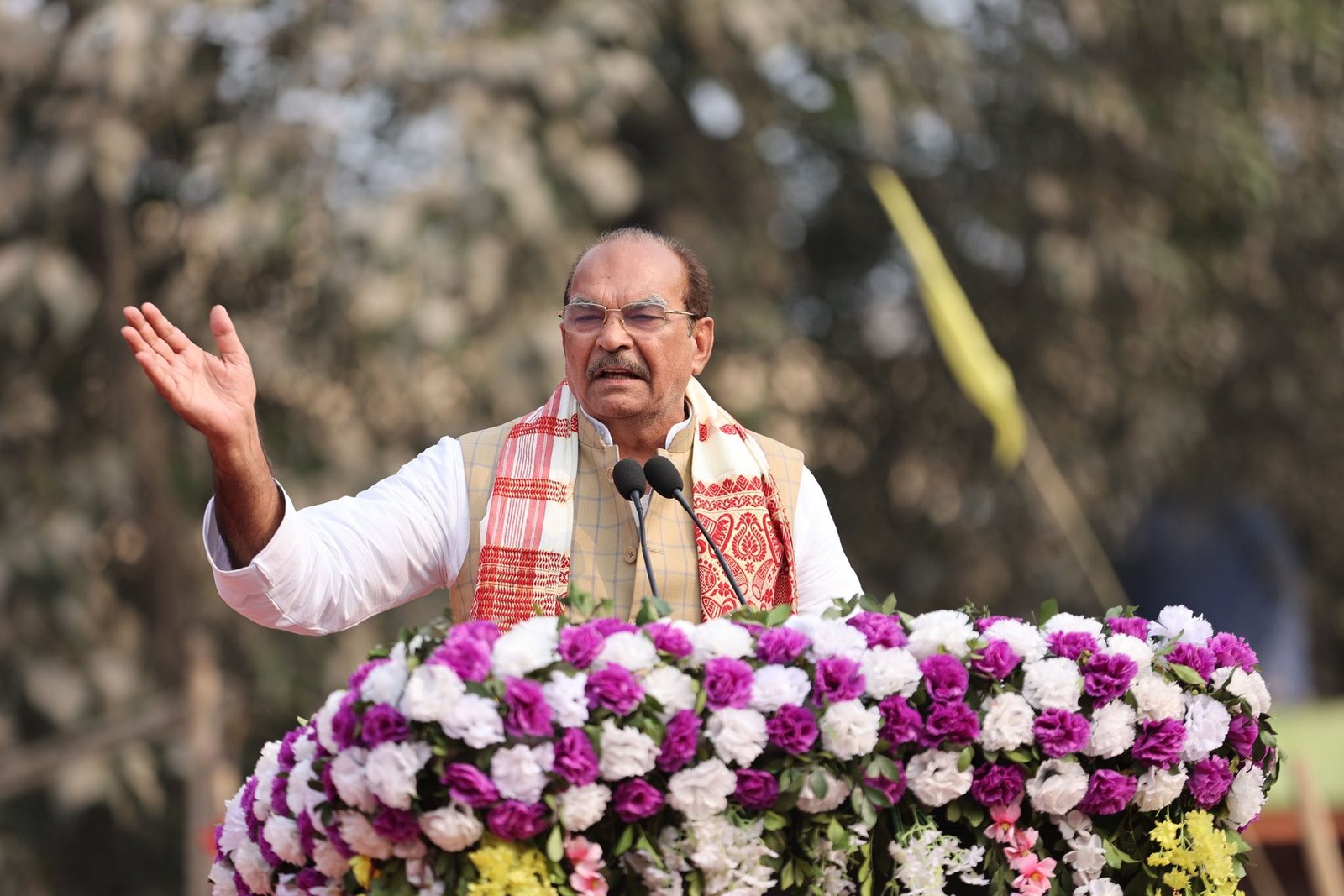
The political landscape in India has witnessed yet another controversy following remarks made by Congress President Mallikarjun Kharge regarding Prime Minister Narendra Modi. A statement that Kharge made during a public event has sparked significant debate and led to a misunderstanding that escalated tensions in the venue.
During his speech, Kharge suggested that only a revolt could lead to Modi’s departure from power. However, this particular part of his statement was reportedly taken out of context. A heckler named Santosh Kumar, who was present at the event, later claimed that only a fragment of Kharge’s comments was heard, leading to what he described as a misunderstanding.
After heckling Kharge, Kumar was escorted out of the event by security personnel. The incident has drawn attention to the broader discourse surrounding political rhetoric in India, especially in the context of opposition parties’ strategies against the ruling government. The heckler’s comments and subsequent removal from the venue highlight the charged atmosphere that often accompanies political gatherings in the country.
Reactions to the Incident
The fallout from Kharge’s comments and the ensuing incident has prompted various reactions across the political spectrum. Supporters of the Congress party have rallied around Kharge, emphasizing the importance of free speech and the need for constructive political dialogue. They argue that the heckler’s actions only serve to stifle dissent and criticism of the government.
Conversely, members of the ruling Bharatiya Janata Party (BJP) have seized the opportunity to criticize Kharge and the Congress party. They assert that his remarks reflect a deeper issue within the opposition’s inability to present a cohesive and constructive alternative to Modi’s leadership. This incident may further amplify the divisions between the two major political parties as the next election approaches.
Implications for Political Discourse
This incident serves as a reminder of the volatile nature of political discourse in India. As political leaders navigate the complexities of their messages, the potential for miscommunication remains high. The public’s reaction to such incidents can also reflect broader societal sentiments regarding governance and accountability.
Moreover, as the political climate continues to evolve, it is crucial for politicians and their supporters to be mindful of how their words can be interpreted. The potential for misunderstandings can lead to increased tensions and a more polarized environment, making it essential for leaders to communicate their messages clearly and effectively.
The upcoming elections will likely see heightened scrutiny of political rhetoric, and incidents like this could shape voter perceptions. With both the Congress party and the BJP preparing for what promises to be a fierce electoral battle, clear communication will be more important than ever.
Source: NDTV India