[ad_1]
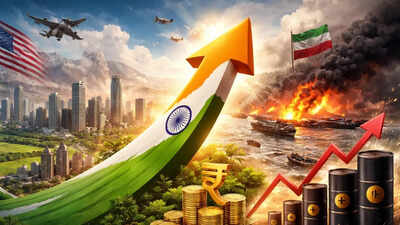
The Monetary Policy Committee (MPC), led by Reserve Bank of India (RBI) governor Sanjay Malhotra kept the repo rate unchanged and continued with the neutral stance while flagging risks to GDP growth and inflation. The ongoing US-Iran war (two week ceasefire announced) and its impact on the global economy has been pointed out as a risk to India’s growth prospects as well. “Before the outbreak of the conflict, India’s macroeconomic fundamentals exuded confidence with buoyant growth and low inflation. Conditions turned adverse in March with the widening of the conflict zone and its intensification,” Sanjay Malhotra said in his policy statement. He noted that the fundamentals of the Indian economy are on a ‘stronger footing’ at the current juncture than in previous crisis episodes as well as relative to many other economies. The central bank governor is of the view that this will provide the Indian economy with ‘greater resilience’ to withstand shocks.Also Read | RBI policy: Why did MPC keep repo rate unchanged? RBI governor Sanjay Malhotra explainsHowever, the downside risks to growth projections remain, especially in case of a prolonged West Asia conflict.
5 Point Impact of US-Iran War on Indian Economy
RBI governor Sanjay Malhotra pointed out five ways in which the Indian economy will be impacted by the ongoing conflict. He elaborated on the channels through which the shock can be transmitted. These are:
- First, elevated crude oil prices could increase imported inflation and widen the current account deficit.
- Second, disruptions in energy markets, fertilisers and other commodities may adversely impact industry, agriculture and services, reducing domestic output.
- Third, heightened uncertainty, increased risk aversion and safe haven demand could impact domestic liquidity conditions, economic activity, consumption and investment.
- Fourth, weaker global growth prospects may dampen external demand and reduce remittance flows.
- Finally, adverse spillovers from global financial markets could tighten domestic financial conditions and raise the cost of borrowing.
The RBI governor has cautioned that what has begun as a supply shock can potentially transform into a demand shock over the medium term if the restoration of supply chains is delayed.While GDP growth for FY 2025-26 is seen at 7.6%, the economy is likely to grow at 6.9% in FY 2026-27 as per RBI’s initial assessment in the first monetary policy review of FY27. RBI has forecast that India’s GDP will grow at 6.8% in the first quarter, 6.7% in the second quarter, 7% in the third quarter, and 7.2% in the fourth quarter of the current financial year.“Going forward, elevated energy and other commodity prices, as also shocks to availability of inputs due to disruptions in the Strait of Hormuz are likely to impact growth in 2026-27,” Malhotra said in his statement. He noted that the government has taken ‘proactive’ steps to ensure supply constraints are eased for critical sectors.“Sustained momentum in the services sector, persisting impact of GST rationalisation, and healthy balance sheets of financial institutions and corporates should continue to support economic activity. Business expectations remain optimistic, and leading indicators point towards continued resilience in manufacturing and services sectors. Moreover, the Government’s focus on scaling up domestic manufacturing in several strategic and frontier sectors augurs well for India’s ensuing growth trajectory,” he said.“Further escalation and wider spread of the conflict, heightened volatility in global financial markets and weather-related events, however, weigh on the domestic growth outlook. Risks to the baseline projections are tilted to the downside, with uncertainty remaining elevated due to the ongoing West Asia conflict,” he added.
[ad_2]
Source link