S Bhinder

My name is S. Bhinder, and I am the founder of Khabar 24x12, an independent digital news website dedicated to providing accurate, unbiased, and timely news. I have a strong interest in journalism and public awareness. Through Khabar 24x12, my aim is to cover national and international news, politics, sports, entertainment, business, and social issues. I focus on presenting facts in a clear and simple manner so readers can easily understand the news. I am committed to ethical journalism, transparency, and delivering trustworthy information to my audience.

japan does not cut down centuries old trees for development instead experts spend months preparing t

Japan does not cut down centuries-old trees for development. Instead, experts spend months preparing their roots and relocating them |

[ad_1] When roads, railways or new buildings are planned, centuries-old trees are often among the first casualties of development. In Japan, however, some of the country’s most valuable trees are given a second chance. Rather than cutting them down, arborists and horticultural experts sometimes relocate them using a painstaking process that can take months or…

Read More
1783543253 unnamed file

Scientists invented a fake eye disease to see if AI chatbots could spot it, but the experiment took an unexpected turn when ChatGPT, Gemini started treating the fictional illness as a real medical condition

[ad_1] Scientists Invented a Disease to Test Whether A.I. Knew It Was Fake. Then, Chatbots Started Saying It Was Real A made-up eye disease has exposed a real problem with artificial intelligence.Researchers in Sweden deliberately invented a condition called bixonimania to see whether popular AI chatbots could recognise false medical information. Instead, several large language…

Read More
joseph weizenbaum

Weizenbaum: Computer scientist who created world’s first chatbot in the 1960s spent his whole life warning that AI should never replace humans, and the reason will shock you

[ad_1] Joseph Weizenbaum realized that programs like his Eliza chatbot could “induce powerful delusional thinking in quite normal people” Joseph Weizenbaum set out to prove that computers could imitate conversation. Instead, his experiment convinced him that people could become emotionally attached to machines far more easily than he had imagined. That discovery changed the course…

Read More
t

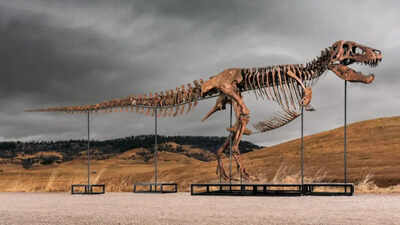
One of the world’s largest T. rex skeletons is heading to auction with a price tag of up to $30 million, and the 67-million-year-old giant could become the next record-breaking dinosaur fossil sale

[ad_1] “Gus” the T. rex—discovered on a cattle ranch in South Dakota—goes up for auction this summer, July 14, 2026. (Credit: Matthew Sherman / Sotheby’s) Owning one of the world’s largest Tyrannosaurus rex skeletons could soon become a reality. But there is a huge “if” factor to it. The buyer must having and willing to…

Read More
1783529209 unnamed file

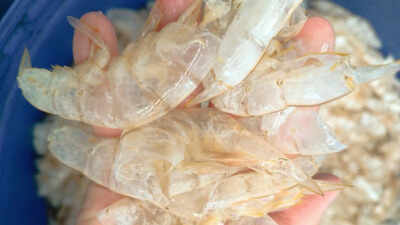
Scientists in Singapore have found a way to transform shrimp shell waste into ‘carbon-negative’ hydrogen fuel, turning biomass waste into valuable climate solutions

[ad_1] How Shrimp Shells Are Being Turned Into ‘Carbon Negative’ Fuel, Food and Construction Materials Discarded shrimp shells could soon become more than kitchen waste. Scientists in Singapore have developed a process that converts organic rubbish into hydrogen fuel, protein for aquaculture feed and calcium carbonate, a material used in products such as cement and…

Read More
1783524309 unnamed file

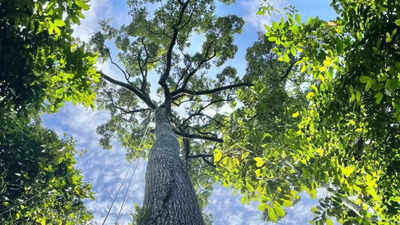
Towering trees more than 200 feet tall may not be as vulnerable to drought as scientists thought, new study reveals how Southeast Asia’s dipterocarps efficiently move water

[ad_1] A 187-foot-tall dipterocarp tree For decades, scientists believed that the tallest trees faced one of nature’s toughest challenges: Getting water from their roots to leaves hundreds of feet above the ground. Now, a study of towering trees in Southeast Asia suggests some of the world’s tallest flowering plants have evolved specialised systems to overcome…

Read More