NASA’s James Webb Space Telescope detects methane hidden deep inside interstellar comet 3I/ATLAS with unusual carbon dioxide abundance |

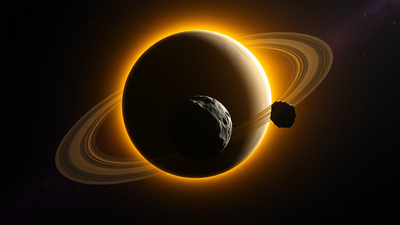
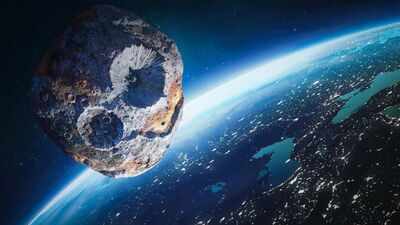
The view coming back from NASA’s James Webb Space Telescope has a way of turning familiar categories of comet science slightly awkward. 3I/ATLAS, an interstellar object only briefly passing through the solar system, has been watched before, but this time the reading feels less like a routine update and more like a chemical surprise that…

Read More

Humans may still be evolving on the Tibetan plateau: Scientists reveal hidden signs of high-altitude adaptation above 3,500 metres |

High on the Tibetan Plateau, where the air feels thin in a way that is hard to describe unless you’ve stood there, human life has been quietly adjusting itself for thousands of years. Villages sit at heights where most visitors feel breathless within hours, sometimes minutes, yet whole communities carry on with farming, family life,…

Read More

Mathematical model decodes how ambitious you should be. It’s not what conventional wisdom says

Mathematical model reveals how ambitious you should be. A mathematical model has now cracked the exact degree to which one should be ambitious and unlike conventional wisdom, it says ‘don’t shoot for the stars’. Researchers at the University of Wyoming, Stanford University and the University of Colorado-Boulder came up with the mathematical model to show…

Read More

She discovered what stars are made of and changed astronomy forever: Meet Cecilia Payne-Gaposchkin, honoured after 101 years of scientific legacy |

More than a century after she revolutionised astronomy with a discovery that reshaped humanity’s understanding of the cosmos, Cecilia Payne-Gaposchkin is receiving fresh recognition for her extraordinary achievements. English Heritage has unveiled a blue plaque at her former home in Notting Hill, London, commemorating the scientist whose groundbreaking work revealed that stars are composed primarily…

Read More

What is Wolbachia: The Google-backed bacteria behind 32 million mosquitoes fighting dengue and malaria |

Image: Left/Canva/Right/Wikipedia Mosquito-borne infections, including dengue, Zika, and chikungunya, continue to pose risks for millions around the world. With the rise in global warming and mosquito numbers, scientists are finding new ways to limit the spread of diseases. The most viable approach appears to be the use of Wolbachia. Wolbachia is a natural bacterium found…

Read More

Google discovery: PhD student found a lost Maya city while scrolling through page 16 of Google |

Most major archaeological discoveries begin with years of fieldwork, expensive expeditions and painstaking excavation. The discovery of Valeriana, a vast ancient Maya city hidden beneath the forests of southern Mexico, began very differently. Luke Auld-Thomas, a PhD student at Tulane University, was searching online when he came across an obscure LiDAR dataset buried deep in…

Read More