
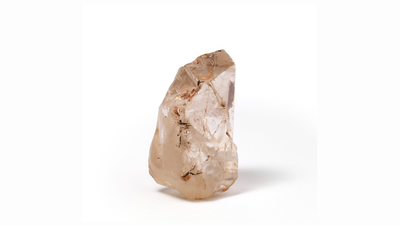
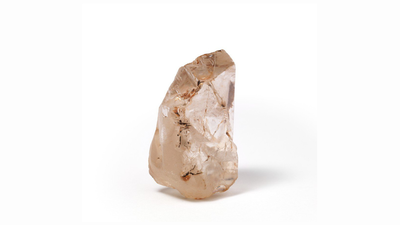
Scientists from China have claimed they might have found a mineral that is harder than the cubic diamond, which is known to the world as the hardest existing mineral. The hexagonal diamond (HD) is supposedly the toughest mineral, though its existence remains questionable. Hexagonal diamond (also known as lonsdaleite) is usually found at sites impacted by meteorite exposure. But because the quantities remain minimal and mixed with minerals, some scientists doubted whether it was a distinct material. A recent paper published in the Nature journal describes how researchers have made a bulk piece of pure lonsdaleite using extreme pressure and heat.
Hexagonal diamond may be harder than traditional diamonds, Chinese scientists claim
A post on March 4 from Nature has revealed China’s researchers claiming to have found a mineral harder than the cubic diamonds (CD), better known as the ‘Ultimate Semiconductors’, gaining traction in both scientific and industrial spaces. Researchers have been pursuing an unusual variant of it known as hexagonal diamond (HD) that might be even harder. After decades of claims and counterclaims about whether this mysterious material can be synthesised in a laboratory, Chinese researchers report that they have done it.Scientists have been chasing the material since it has “potential applications in many fields, for example, in cutting tools, in thermal management materials and in quantum sensing”, says Chongxin Shan, a physicist at Zhengzhou University, who co-led the work.“There are hundreds of claims from people who believe they have seen it,” says Oliver Tschauner, a mineralogical crystallographer at the University of Nevada, Las Vegas, who expert-reviewed the paper. “But this is the first very accurate characterisation of this elusive material.”
All about the synthesis of hexagonal diamond
According to Mindat.org, Hexagonal Diamond (HD) is a transparent brownish-yellow, greyish-looking mineral also known as Lonsdaleite. It was named after Dame Kathleen Lonsdale, a crystallographer who established the structure of benzene by X-ray diffraction methods in 1929. She also worked on the synthesis of diamonds and was a pioneer in the use of X-rays to study crystals. The researchers began with highly oriented graphite, a highly ordered form akin to the carbon in pencils. They sandwiched it between tungsten carbide anvils and subjected it to 20 gigapascals of pressure (roughly 200,000 times atmospheric pressure) at temperatures ranging from 1,300–1,900 °C. Compression occurred along the c-axis, targeting the stacked carbon layers from above rather than the sides. This yielded a millimetre-sized sample of pure hexagonal diamond (HD).To verify the HD synthesis, the team employed X-ray diffraction, which scatters X-rays off atoms to map their arrangement, confirming the sample’s structural purity. Atomic-resolution electron microscopy further revealed the distinctive hexagonal stacking of carbon atoms.
The existence of hexagonal diamond remains disputed
The research has resolved the long-standing argument on the existence of hexagonal diamonds as a discrete carbon phase and provides new insights into the graphite-to-diamond phase transition, opening the gates for future research and practical use of the diamond in advanced technological applications. Just five years after scientists first predicted hexagonal diamonds, geologists claimed to have discovered a natural specimen inside a meteorite. They dubbed this rare structure lonsdaleite. Around the same period, another team announced success in creating hexagonal diamonds by compressing graphite in the lab.Nearly 50 years on, however, two studies led by the same researcher delivered a bombshell: using advanced techniques, they revealed that neither the meteorite find nor the synthetic crystals were genuine hexagonal diamonds. Instead, these were merely cubic diamonds marred by unusual defects.In the early 2020s, fresh experiments produced variants of ‘lonsdaleite’, but these were either microscopically small or fleeting, vanishing in nanoseconds.Consequently, hexagonal diamonds’ very existence remains hotly debated and maddeningly slippery, the researchers observe in their paper. The chief stumbling block? Fabricating bulk quantities of pure-phase material, which has foiled deeper insights into its fundamental traits.If the work holds up, this new material could find use in a range of applications, from cutting tools and abrasives to high-performance electronics. Changing the world’s leading industries.