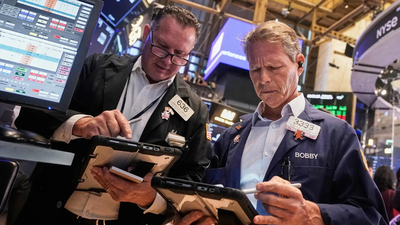
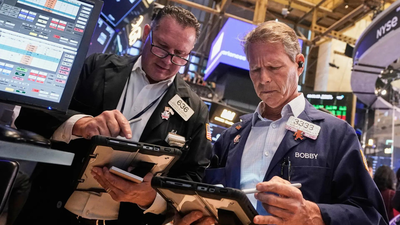
US stock indexes traded mixed to lower in choppy dealings on Friday morning as the fallout from the war with Iran kept pressure on oil prices and added to concerns about the global economic outlook.The S&P 500 slipped 0.2 per cent after rising as much as 0.9 per cent earlier in the session. The Dow Jones Industrial Average was up 34 points, or 0.1 per cent, at 11:06 am Eastern time, while the Nasdaq composite declined 0.4 per cent, AP reported. The uneven movement follows heavy market turbulence earlier in the week, putting major indices on course for a third consecutive weekly loss.Energy markets remained in focus. Brent crude, the global benchmark, traded above $100 per barrel, though marginally lower than Thursday’s close of $100.46. It has surged more than 37 per cent this month. US crude rose 0.1 per cent to $95.83 a barrel after settling at $95.73 the previous day and is up roughly 43 per cent this month.Oil prices have been volatile since the conflict began, with Iran’s actions effectively halting cargo traffic through the Strait of Hormuz, a key route that normally carries about a fifth of the world’s oil supply. Producers have cut output as shipments remain constrained. Analysts have warned that if the disruption persists, crude prices could rise to around $150 per barrel.While the International Energy Agency said members would release a record 400 million barrels from emergency reserves, some economists believe the move may offer limited reassurance to markets. President Donald Trump earlier signalled that additional steps could be taken to ease pressure on oil flows, following the administration’s decision to temporarily allow India to purchase Russian crude.Fresh economic data added to investor caution. The Commerce Department reported that consumer prices rose 2.8 per cent year-on-year in January. Core inflation, which excludes food and energy, climbed to 3.1 per cent from 3 per cent in the previous month, marking the highest level in nearly two years. Despite this, consumer spending and incomes both increased by 0.4 per cent during the month.The University of Michigan’s latest survey showed consumer sentiment dipped to its lowest reading of the year as petrol prices rose following the outbreak of war. Separately, the Labour Department said job openings rose to nearly seven million in January, exceeding economists’ expectations.Data also confirmed that the US economy grew at a subdued annual rate of 0.7 per cent in the October–December quarter, revised down from earlier estimates.“GDP and the job market have been expanding, but the rate of change has been slowing, which leads to concerns about the overall economy — and that was even before we stared a war in the Middle East, which spiked the price of oil,” Chris Zaccarelli, chief investment officer for Northlight Asset Management, said in an email.Sectoral trends were mixed on Wall Street. Financial and healthcare stocks supported the broader market, with JPMorgan rising 1.1 per cent and Eli Lilly gaining 1.6 per cent. Software firm Adobe dropped 6 per cent despite beating revenue and profit forecasts, while Ulta Beauty tumbled 10.5 per cent after reporting weaker-than-expected quarterly earnings.Bitcoin climbed 4.6 per cent to around $72,777, lifting shares of cryptocurrency-linked companies such as Coinbase Global, which rose 2.4 per cent, and Strategy, up 4.9 per cent.In the bond market, the yield on the 10-year Treasury eased to 4.25 per cent from 4.26 per cent late Thursday, though it remains higher than the 3.97 per cent level seen before the conflict began.Overseas markets showed mixed trends. European indices moved higher in early trade, with Britain’s FTSE 100, Germany’s DAX and France’s CAC 40 all gaining modestly. In Asia, Japan’s Nikkei 225 fell 1.2 per cent, with technology stocks among the biggest losers as SoftBank Group declined 4.5 per cent.