
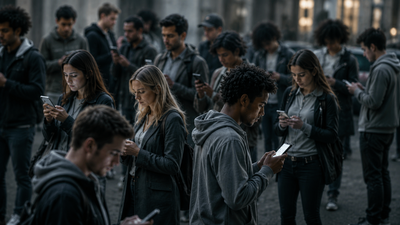
There was a time when going out to buy bread, collect a prescription or pay a bill almost guaranteed a few words with someone. You might chat with the shopkeeper, exchange a joke with the person behind the counter or say something to a neighbour while waiting in a queue. Most of those conversations meant nothing at the time. But they were part of everyday life. They made the neighbourhood feel familiar.Today, many of those small interactions have quietly disappeared. We order groceries online, bank through apps, scan our own shopping and send a message instead of making a call. Even when we are standing next to other people, there is often a phone in our hands.Now, a new analysis by psychologists suggests that this change may be showing up in how much we actually speak. The study, published in Perspectives on Psychological Science, found that the average amount of speech recorded in people’s daily lives declined substantially between 2005 and 2019.
The surprising discovery behind the study
The finding was not what researchers originally set out to investigate. Psychologists Valeria Pfeifer of the University of Missouri-Kansas City and Matthias Mehl of the University of Arizona were looking at data from 22 studies involving about 2,200 participants. The participants were between 10 and 94 years old and came from the US and Europe.They used a small device called an electronically activated recorder, or EAR, which captured brief samples of people’s everyday speech. The researchers then looked at how the amount of speech varied depending on the year in which the data had been collected.What they found surprised them. In 2005, participants spoke an estimated 16,632 words a day on average. By 2019, that figure had fallen to about 11,900 words. That represents a decline of roughly 28%, or about 338 fewer spoken words per day for each year across the period studied.
It is the small conversations that are disappearing
File photo
The most interesting part of the finding is not simply that people are saying fewer words. It is where those words may be disappearing from. According to Mehl, the missing words are likely to include the brief conversations that happen throughout an ordinary day like talking to a neighbour, making small talk with a shopkeeper, asking someone for directions or exchanging a few words with a stranger.These interactions may last only a minute or two. But they give people small opportunities to feel connected to the world around them. Think about the difference between walking into a local shop and ordering something online. The online purchase may be faster. It may also be more convenient. But it removes the greeting, the small question about your day and the familiar face behind the counter.Do that repeatedly, every day, and a surprisingly large part of social life disappears without anyone making a conscious decision to give it up.
Technology has made life easier… and quieter
The researchers point to the rise of digital technology as one possible explanation for the decline. Their study itself does not prove that smartphones or apps caused people to speak less, but the timing overlaps with the rapid spread of smartphones, texting and other digital services.That connection is easy to recognise in everyday life. You no longer need to call the bank. You can use an app. You don’t have to ask someone at a shop where a product is. You can search for it. You don’t need to talk to the cashier. There is a self-checkout machine. You don’t even need to ask a stranger for directions. Google Maps will do it for you.
Young people may be losing even more spoken interaction
File photo.
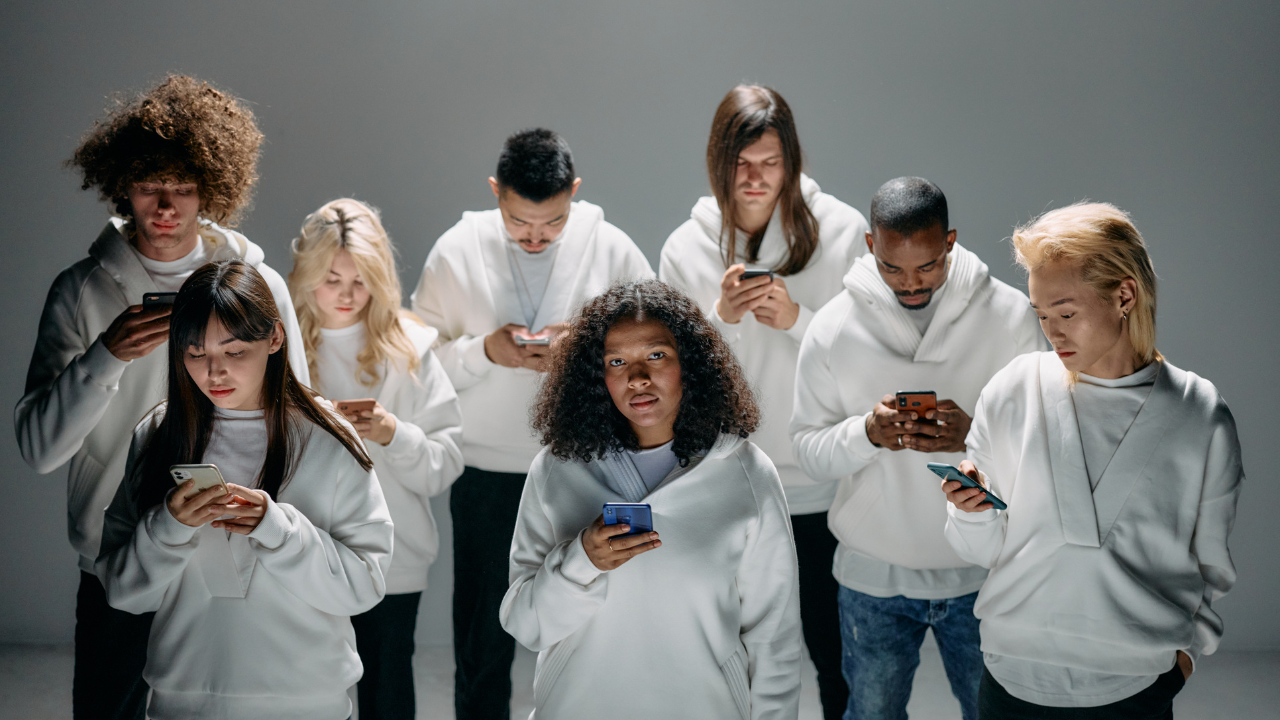
The study also found a steeper decline among participants under 25. Researchers estimated a reduction of about 451 spoken words per day for each later year in this age group, compared with about 314 among those aged 25 and above. That does not mean young people have suddenly stopped communicating. Quite the opposite. Young adults communicate constantly through WhatsApp, Instagram, Snapchat, DMs, memes, emojis and voice notes. They can be in contact with dozens of people without actually speaking to any of them.A text message can tell someone what you are thinking. A voice note can carry your voice. But an ordinary face-to-face conversation involves much more: pauses, expressions, tone, body language and the little reactions that tell you whether someone is amused, uncomfortable, distracted or genuinely interested. Those details are difficult to reproduce through a screen.
We are surrounded by voices, but speaking less ourselves
There is another strange part of modern life. We have never had so many voices around us. Podcasts, YouTube videos, reels, livestreams and audiobooks can fill hours of our day. But listening to other people talk is not the same as talking to someone.A person can spend an entire commute listening to a podcast, answer messages during lunch and watch videos before bed without having a single spontaneous conversation. Even phone calls have become less central to communication in many people’s lives. The rise of messaging has changed the rhythm of conversation: instead of sitting down and talking, people often exchange short messages throughout the day.Voice notes have added another layer. They sound more personal than text, but they are still often one-way. One person records, the other listens when convenient, and the conversation can continue without either person being fully present at the same moment.
The study has an important limitation
There is one point worth keeping in mind before concluding that everyone is becoming antisocial. The researchers did not follow the same individuals continuously from 2005 to 2019. Instead, they analysed speech data collected in different studies during those years and looked at the relationship between speech levels and the year the data was collected.The researchers have also cautioned that their data largely comes from Western, individualistic societies. So the results should not automatically be treated as proof that people everywhere, including India, are speaking less.And the data ends in 2019. The researchers do not yet have evidence showing what happened to spoken interaction after the pandemic and the widespread shift towards remote work.
Perhaps the answer is not giving up technology, but making room for people
There is little chance of going back to a world without smartphones, online banking or food delivery. Nor should we necessarily want to. But perhaps some things are worth doing the slower way.Say hello to the neighbour instead of walking past with headphones on. Ask the shopkeeper how their day is going. Make the phone call instead of sending another message. Sit with someone without checking your screen every few minutes. These are tiny changes. They do not require deleting social media or giving up technology. They simply put a few more human interactions back into a day.The most important message from the study may not be that we are speaking 338 fewer words every year. It may be that some of the words we have stopped saying were never really about information at all. They were about being noticed, recognised and connected to the people around us. And those are conversations worth having.