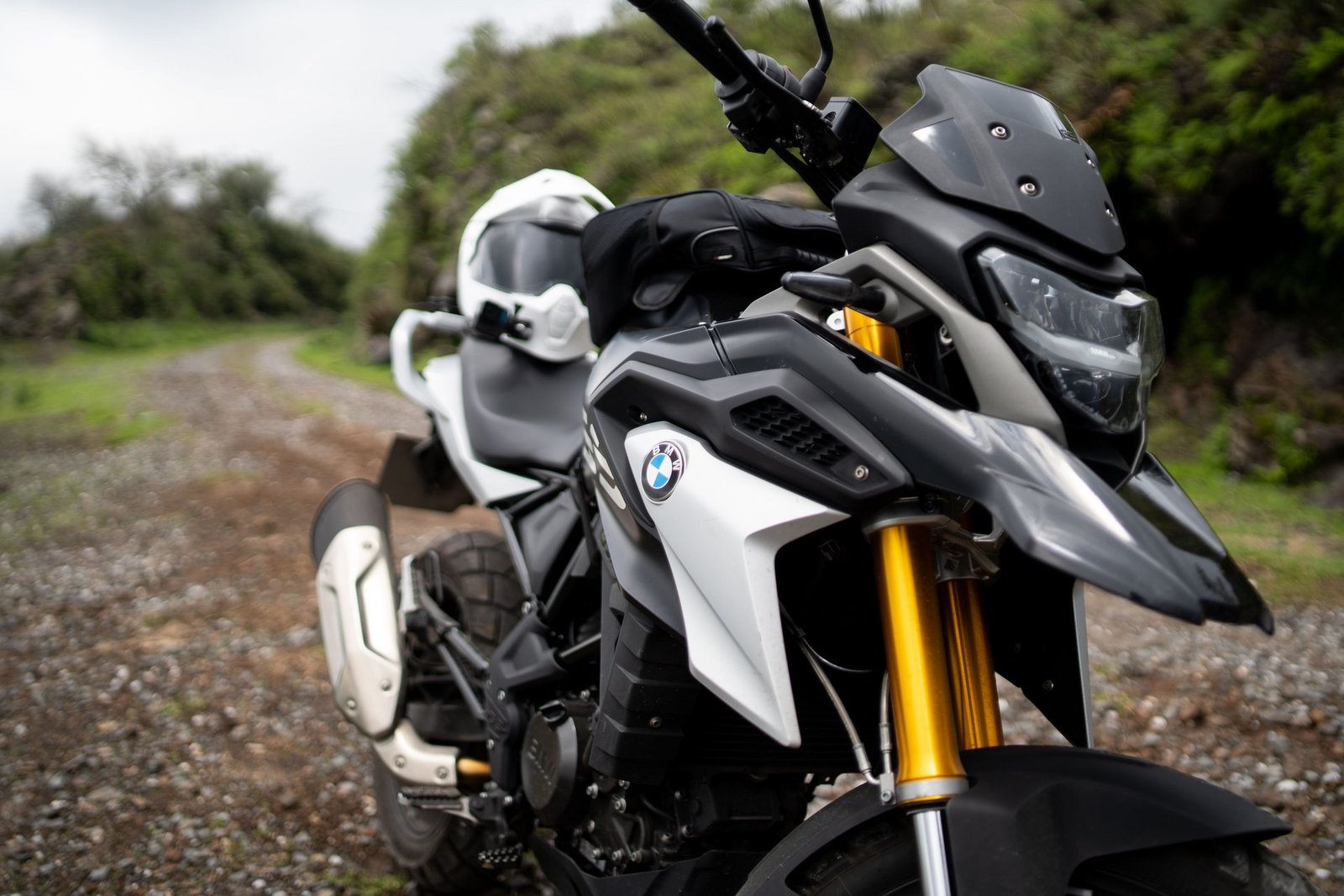
The recently launched BMW F 450 RR stands out as the latest addition to the company’s supersport motorcycle range. This fully-faired bike, equipped with a parallel-twin engine, competes directly with notable models such as the Aprilia RS 457 and the Kawasaki Ninja 500. This article provides an in-depth comparison of these three superbikes.
Engine Performance
In terms of power, the BMW F 450 RR leads its class. It retains the same 420cc parallel-twin liquid-cooled engine that made its debut in the F 450 GS, producing a robust 48 horsepower at 8,750 RPM and 43 Nm of torque at 6,750 RPM. Conversely, the Aprilia RS 457’s engine is slightly larger at 457cc, generating 47.6 horsepower and 43.5 Nm of torque.
While the specifications indicate that the BMW has a slight edge in power output, real-world performance assessments will only be possible once the motorcycle has undergone extensive riding tests.
Dimensions and Accessibility
When it comes to rider accessibility, the Kawasaki Ninja 500 offers the most accommodating saddle height. It features a standard seat height that is lower than its competitors, making it more suitable for shorter riders. BMW provides an optional low rider seat that reduces the height by 15mm, bringing it to 775mm, alongside a high sport rider seat that increases it by 20mm, reaching 810mm. The Aprilia RS 457, on the other hand, has the tallest seat in this segment.
In terms of wheelbase, the Kawasaki Ninja 500 is 30mm shorter than the BMW F 450 RR. However, neither BMW nor Aprilia disclose their models’ ground clearance figures, and the wheelbase information for the RS 457 remains unlisted.
Suspension, Tires, and Brakes
All three motorcycles are fitted with 17-inch alloy wheels and are equipped with front tires sized at 110 and rear tires at 150. The suspension and braking systems, however, differ significantly among the models. The F 450 RR features a 43mm USD fork in the front, along with an adjustable monoshock at the rear that allows for customizable preload and rebound damping. The RS 457 includes a 41mm USD fork that is preload-adjustable, while the Ninja 500 opts for a 41mm telescopic fork, paired with a preload-adjustable monoshock.
In braking performance, the BMW utilizes a 310mm front disc along with a radially mounted caliper, while the Aprilia boasts a slightly larger 320mm front disc with similar caliper design. In contrast, the Kawasaki employs a 310mm disc with an axially mounted caliper. All three motorcycles feature dual-channel ABS as a standard safety measure.
Technological Features
In terms of technology and features, the F 450 RR emerges as the most advanced, offering optional features such as the Easy Ride Clutch (ERC), multiple ride modes, and a bidirectional quickshifter on higher-end variants. This model also includes a comprehensive suite of electronic rider aids, including three riding modes, lean-sensitive ABS, traction control, heated grips, and a 6.5-inch TFT display with smartphone connectivity and turn-by-turn navigation.
The Aprilia RS 457 follows closely with a solid electronic package that includes three riding modes, three levels of traction control, and an optional quickshifter. It features a 5-inch TFT display with Bluetooth capabilities and turn-by-turn navigation as well. On the other hand, the Ninja 500 adopts a more straightforward approach, equipped with an LCD instrument cluster, LED lighting, dual-channel ABS, and an assist-and-slipper clutch, but it lacks advanced electronic rider aids like traction control and riding modes.
Source: Autocar India