
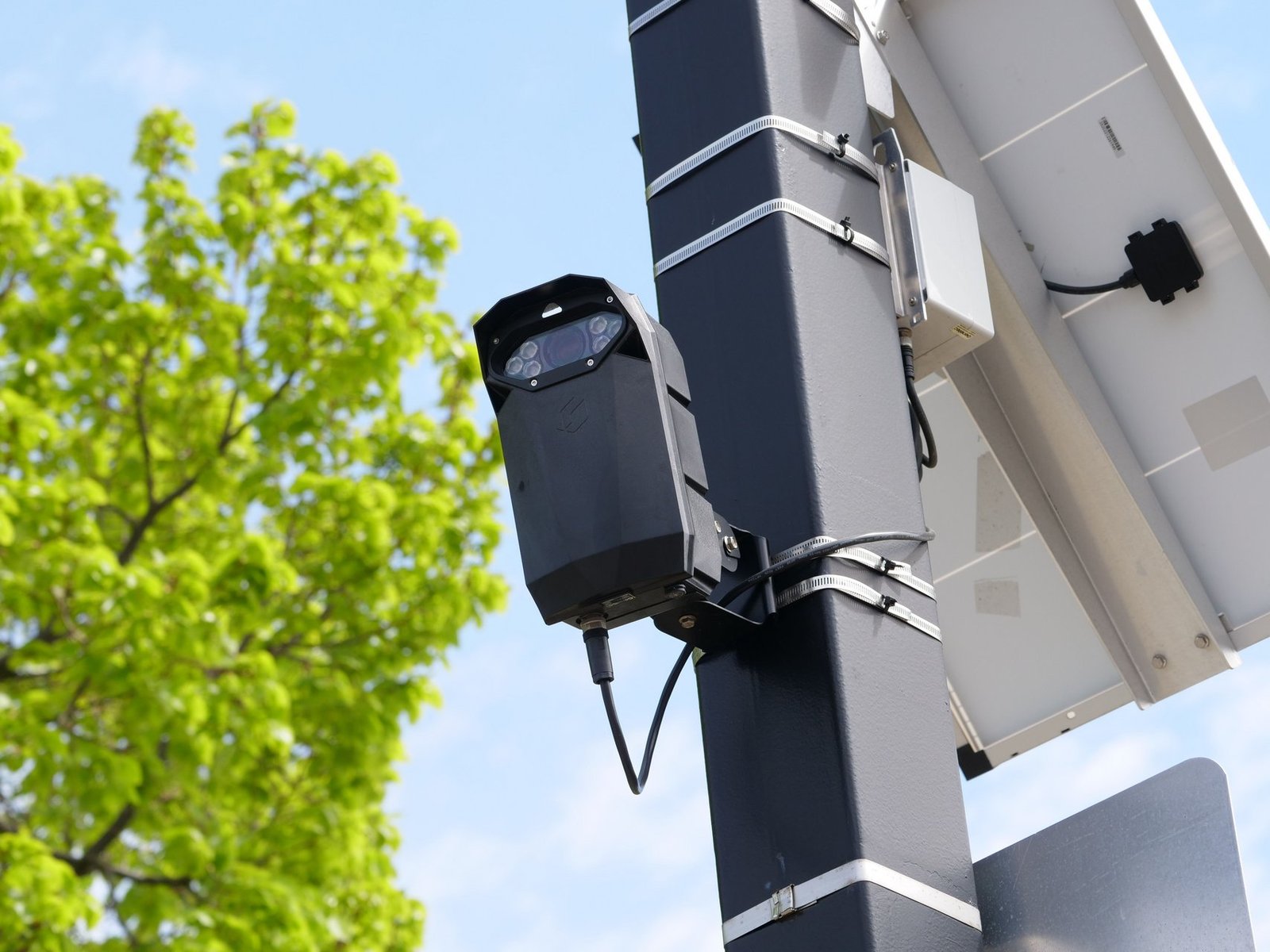
In the serene and affluent Old Braeswood neighborhood of Houston, a surprising wave of vandalism has raised eyebrows. Recently, four surveillance cameras were destroyed in the dead of night, leaving the once-standing black oval cameras and their solar panels on the ground. These devices, operated by Flock Safety, have become a focal point of debate, reflecting the broader tension over the proliferation of AI-driven surveillance systems across the United States.
Expanding Surveillance Network
Established in 2017, Flock Safety has rapidly emerged as a leading provider of Automatic License Plate Readers (ALPRs) in the U.S. These cameras capture images of vehicle plates, storing the data for a certain period. While Flock claims to work with over 7,000 communities and deploys approximately 100,000 cameras nationwide, precise data on their usage remains undisclosed.
Documents obtained by the BBC reveal the extensive reach of Flock’s network, which includes access to thousands of cameras. For instance, the Metro Transit Authority in Houston, owning just 35 cameras, can tap into a network of about 20,000 devices, some located as far away as Albany County, New York. This vast network capability is a significant draw for law enforcement, enhancing their investigative reach.
However, the rapid expansion of this network has sparked concern. Critics argue that the interconnectedness of these surveillance systems poses a greater threat to privacy than individual cameras, fearing the potential misuse of such data to track everyday activities.
Privacy Concerns and Misuse
Privacy advocates have highlighted several instances of misuse, raising alarms about the potential for abuse. A notable case involved a Kentucky police officer who was charged after using the Flock system to track his ex-girlfriend over 2,000 times, despite a protection order. This incident was flagged by Flock’s new AI-powered audit tool, designed to detect suspicious activities.
Further concerns were voiced over cases like a Texas detective who searched over 80,000 images to locate a woman suspected of having an abortion, without obtaining a warrant. Such incidents underscore the fear that Flock’s technology could circumvent traditional legal safeguards like warrants.
While Flock does not employ facial recognition technology, other agencies do. Documents indicate that Harris County Sheriff’s Office in Houston uses Clearview AI, a controversial facial recognition tool, further complicating the privacy landscape.
Community and Legislative Pushback
In response to privacy concerns, several jurisdictions, including major cities like Los Angeles, Seattle, and Austin, have opted not to renew contracts with Flock. Over 200 communities have canceled or refused to renew contracts since 2021, with privacy and cost cited as primary reasons.
On the legislative front, bipartisan efforts are underway to establish clearer guidelines for surveillance technology. Republican Congressman Keith Self has proposed legislation requiring federal agencies to obtain warrants before accessing Flock data. Meanwhile, Flock has introduced policy changes, such as mandatory audits and reduced default data retention periods, though individual agencies can still extend these periods.
Flock’s CEO, Garrett Langley, emphasizes that decisions about data retention and sharing should be made by individual cities, not the company. Despite this, the ongoing vandalism and public distrust highlight the challenges in balancing safety with privacy.
For individuals like Jessie, an immigrant from Central America, the presence of Flock cameras outside her home prompts anxiety rather than reassurance. Her altered daily routine reflects a broader sentiment of unease, as the debate over surveillance and privacy continues to unfold.