[ad_1]
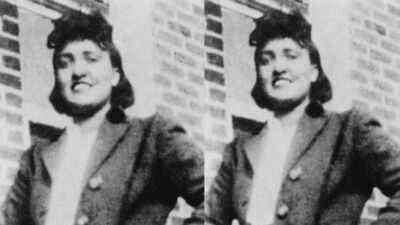
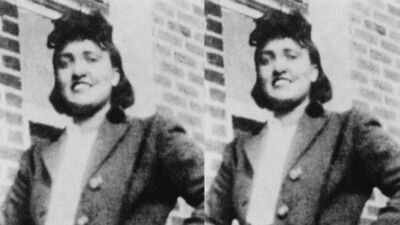
In 1951, Henrietta Lacks, a 31-year-old African-American woman, was diagnosed with cervical cancer at Johns Hopkins Hospital in Baltimore. During her treatment, doctors removed tissue from her tumour for research without telling her or obtaining her permission. The cells behaved unlike any human cells scientists had successfully maintained before: they continued to grow and divide in laboratory conditions. These cells, later named HeLa, became the first human cells that could be continuously grown in culture and went on to transform biomedical research. A 2011 review published in the Journal of the Islamic Medical Association examines Rebecca Skloot’s book The Immortal Life of Henrietta Lacks and discusses the scientific and ethical significance of the HeLa story.
The discovery of HeLa
Henrietta visited Johns Hopkins on February 1, 1951, after experiencing pain and abnormal vaginal bleeding. A biopsy revealed cervical cancer. Before her treatment, cells from the tumour were removed for research without her knowledge or permission, something the review notes was standard practice at the time. During her second visit, researcher George Otto Gey obtained another sample of the tumour.Gey had spent years trying to grow human cells outside the body. Previously collected cells generally survived for only a few days. Henrietta’s cells were different. Gey discovered that some cells from her sample could remain alive, continue dividing and be multiplied in the laboratory. He isolated one of these cells and used it to establish the HeLa cell line.The name HeLa came from the first two letters of Henrietta’s first and last names. The cells were considered “immortal” because, unlike ordinary cells, they could continue dividing rather than stopping after a limited number of divisions.
Why the cells mattered
The discovery gave scientists something they had never had before: a continuously growing human cell line that could be used for repeated experiments.HeLa cells quickly became an important resource for medical and biological research. The review explains that they were vital to the development of the polio vaccine and were used to investigate cancer, viruses and the effects of radiation. Researchers also used them in work involving in-vitro fertilisation, cloning and gene mapping.Their usefulness came largely from their ability to reproduce rapidly and consistently. Scientists could grow large quantities of the cells and distribute them to laboratories, making it easier to conduct experiments under controlled conditions.The scale of their use eventually became enormous. According to the review, scientists around the world used HeLa cells in research involving cancer, AIDS, radiation, toxic substances, gene mapping and many other scientific questions. It also states that there were almost 11,000 patents involving HeLa cells at the time the review was published.
Henrietta never saw the impact
Henrietta, however, never knew what her cells would become. Her cancer progressed rapidly, and she died on October 4, 1951, at just 31 years old. Her cells continued to live and multiply in laboratories long after her death.According to the review, Henrietta’s husband, David Lacks, was told little after her death. Her family remained largely unaware of the existence and significance of the HeLa cell line for more than 25 years. When the family eventually learned about the cells, they struggled to understand how tissue taken from Henrietta could still be alive and being used by scientists.The family also did not receive financial benefits from the industry that developed around HeLa cells, despite their enormous scientific value.
The ethical questions
This is where Henrietta Lacks’ story becomes more than a story of scientific discovery.The review highlights two major questions surrounding human tissue: consent and money. If biological material is removed from a person’s body, should that person have a say in how it is used? And if research based on that material becomes highly valuable, should the individual or their family receive any financial benefit?The case also became part of a wider discussion about informed consent in medical research. The review describes research involving HeLa cells in which patients were injected with the cells without being properly informed. The controversy surrounding such experiments contributed to growing demands for stronger oversight and informed consent in research involving human subjects.
A legacy that continues
Henrietta Lacks’ cells became one of the most important tools in the history of biomedical research. Decades after her death, they were still being used by laboratories around the world.But the significance of Henrietta’s story is not limited to what her cells achieved. Her case helped draw attention to the complicated relationship between scientific progress and the rights of patients whose biological material makes that progress possible.More than seven decades later, HeLa cells remain part of biomedical research. Henrietta Lacks’ legacy therefore carries two powerful messages: her cells helped scientists understand human disease in ways that transformed medicine, while her story forced society to ask whether scientific advancement can come at the expense of informed consent and human dignity.
[ad_2]
Source link