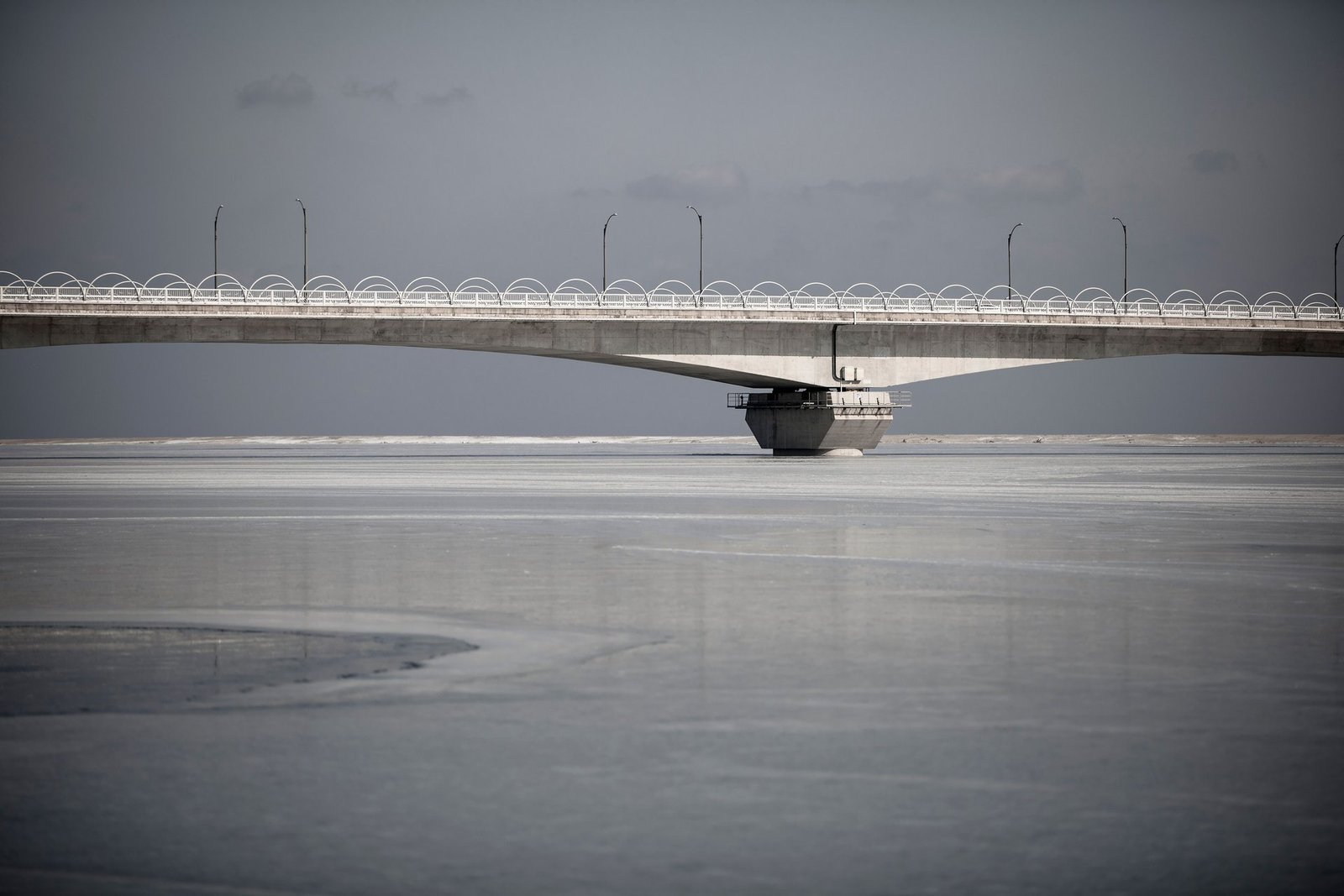
The opening of the first road bridge linking North Korea and Russia marks a significant development in the relationship between the two nations. This new infrastructure, spanning the Tumen River, promises to facilitate the movement of goods and people, enhancing tourism and trade between the countries. According to North Korean state media, the bridge will serve as a conduit for “personnel exchanges, tourism, and trade.”
Potential Military Implications
Despite its potential for economic and cultural exchange, the bridge’s construction has raised concerns about its true purpose. The Ukrainian investigative group, Truth Hounds, suggests the primary objective of the bridge may be to create a secret military logistics route to aid Russia in its ongoing conflict with Ukraine. This development comes at a time of deepening ties between Moscow and Pyongyang, as leaders from both countries have expressed their commitment to support each other against external threats.
Russian Prime Minister Mikhail Mishustin hailed the bridge as a “new symbol of friendship,” while his North Korean counterpart, Pak Thae Song, referred to it as a “historical event.” The bridge is expected to accommodate up to 300 vehicles and over 2,300 people daily, according to reports from Russian news agency TASS.
Infrastructure and Strategic Use
Satellite images released earlier this year revealed the bridge’s extensive support infrastructure, including access roads, a border checkpoint, and parking facilities. Previously, the only road connection was a temporary solution involving wooden planks laid over a rail bridge. Now, with the new bridge in place, initial use will focus on cargo transportation, with plans to extend to passenger traffic later.
The bridge is anticipated to enhance various forms of cooperation, including trade, economics, science, technology, and culture. At the opening ceremony, Prime Minister Mishustin highlighted that ties between Russia and North Korea have reached an unprecedented level.
Economic and Labor Considerations
The bridge’s completion may also impact the export of weapons to Russia, as South Korean intelligence suggests North Korea has already supplied significant military resources to Russia. Furthermore, an estimated 11,000 North Korean soldiers are reportedly engaged in combat in Ukraine.
Additionally, the bridge could facilitate the movement of North Korean workers to Russia. Despite a UN ban on the use of North Korean labor, many workers have entered Russia under student visas to work in construction and logging.
Victor Cha from the Center for Strategic and International Studies noted that the rapid construction of the bridge reflects the volume of trade and military cooperation between the two countries, largely driven by North Korea’s support of Russia’s military efforts in Ukraine.