1280720 2026 07 07t183143076

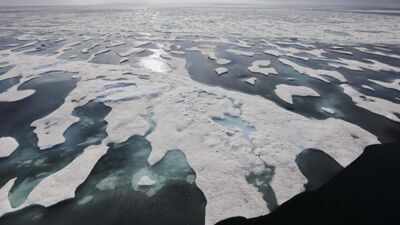
Scientists tried to thicken Arctic ice by pumping seawater onto it. The ice did become thicker and brighter, but there is a big catch

[ad_1] Sea ice melts on the Franklin Starait (AP file photo) Scientists have tested an idea that could help reduce the melting of Arctic sea ice, and the initial results are promising. The method involves spraying of seawater onto existing sea ice in winter and letting it freeze into a new layer.The on-site experiment took…


Read More
what will happen on 13 april 2029 a giant asteroid will pass closer than some satellites and be visi

What will happen on 13 April 2029: A giant asteroid will pass closer than some satellites and be visible to billions |

[ad_1] For most people, asteroids are distant objects that remain hidden behind telescope lenses and scientific instruments. That will briefly change in April 2029, when one of the best-known near-Earth asteroids is expected to become visible without specialist equipment across large parts of the world. The object, called Apophis, has attracted scientific attention for more…

Read More
mercedes benz india records best ever h1 ev share reaches 14

Mercedes-Benz India records best-ever H1: EV share reaches 14%

[ad_1] Mercedes-Benz India has reported its highest-ever first-half and second-quarter sales, continuing its growth momentum in the country’s luxury car market. The German luxury carmaker retailed 9,768 vehicles between January and June 2026, registering a 9 percent year-on-year increase over the 9,013 units sold during the same period last year.The company also posted its best-ever…

Read More
132235820

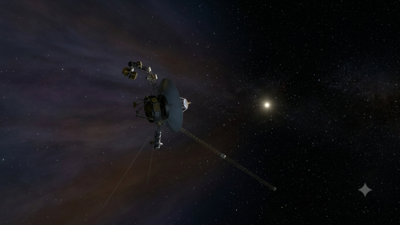
NASA’s Voyager 1 left Earth in 1977; now its signal takes over 22 hours to reach us and it is still sending data

[ad_1] Representational photo of Voyager When NASA launched Voyager 1 in September 1977, it was expected to explore the outer planets before continuing its journey into deep space. Nearly 49 years later, the spacecraft is still continues to send information back to Earth from about 25 billion kilometres away, making it the most distant human-made…

Read More
ai39s cooling crisis why future data centres in space may not need a single drop of water

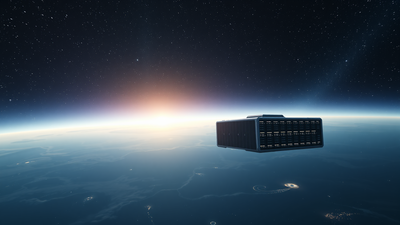
AI’s cooling crisis: Why future data centres in space may not need a single drop of water |

[ad_1] Artificial intelligence is driving an unprecedented surge in demand for computing power. Still, the data centres behind today’s most advanced AI models face a growing challenge: keeping millions of processors cool without consuming vast amounts of energy and water. On Earth, cooling systems can account for a significant share of a facility’s electricity use…

Read More