[ad_1]
A new study which was done across tropical countries suggests that non-native trees can become surprisingly common in young regenerating forests, especially where the canopy is still open. But as the forest matures and the canopy closes, their share tends to decline. The study was published in Nature’s July 2026 journal.The research analysed 1,561 forest plots across 10 tropical countries, giving scientists a broad look at how forest recovery and tree invasion interact over time. The big takeaway is that early-stage regeneration can be highly vulnerable to non-native species, but the balance can shift as natural forest structure returns.
What the study found
In young moist forests, non-native trees made up 28% of stems. They also accounted for 22% of species in those plots, showing that these trees were not just present in small numbers; they were part of the wider forest community during early succession.The pattern was not identical everywhere. In dry forests, non-native trees were still present but made up a smaller share, at about 9% of stems and species, as per the study. Overall, the study found that non-native woody species appeared in 81% of the forest chronosequences examined, which means they were widespread across the recovery timeline rather than confined to just a few unusual sites.
Why young forests are so exposed
Young secondary forests are often disturbed, open and full of ecological gaps. That makes them easier for non-native species to enter, establish and compete with native trees before the canopy closes and conditions become more stable.In the first 10 to 20 years after disturbance, non-native species reached their highest relative density and richness. After that, both measures dropped sharply as forests developed more structure and shade. Still, the study notes that these trees did not disappear entirely, which suggests that forest recovery reduces invasion pressure but does not fully remove it.
Representative image
Why the canopy matters
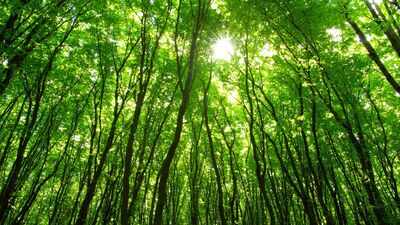
The return of a canopy changes everything. As trees grow taller and the forest becomes denser, light, temperature and moisture conditions shift in ways that tend to favour native forest species over opportunistic non-native ones.That makes canopy recovery a natural form of resistance. Once the forest starts rebuilding its layered structure, it becomes harder for many invasive or non-native trees to dominate the system. But the early years still matter a great deal, because that is when the ecological opening is widest, according to the study in Nature.
A wider tropical pattern
One important feature of the study is its scale. Because it spans 10 tropical countries, it points to a broader pattern rather than a single local exception. That matters for restoration planning, because it suggests that non-native tree pressure is not just a problem in one region or one forest type.The findings also fit a growing body of research showing that natural regeneration can be highly effective, but only when site conditions, disturbance history and local invasion pressures are understood. In other words, letting forests regrow is often a smart strategy, but it is not a hands-off process.
What this means for forest recovery
The study adds nuance to the idea of tropical forest restoration. Young forests can recover on their own, but they may also provide an opening for non-native trees if seeds arrive quickly and native recovery is slow.That means restoration planners may need to pay special attention to early succession. Protecting recovering forests from repeated disturbance, reducing nearby invasion sources and supporting native canopy return could help keep non-native trees from gaining a lasting foothold.It also reinforces a key point: restoration is not only about planting trees. In many places, natural regeneration can be a powerful and cost-effective pathway, but it works best when the ecological conditions are allowed to support native recovery.
Why the findings matter
For tropical countries facing deforestation, fragmentation and land-use change, these results are especially relevant. Forests that regrow after disturbance can recover important ecological functions, but the presence of non-native trees in the early years may shape what those forests become later.The study’s message is not alarmist, but it is practical: if we want young tropical forests to become resilient native ecosystems, we need to understand how invasion pressure changes as the canopy comes back. The earlier the intervention, the better the chances of steering recovery in the right direction.
[ad_2]
Source link