[ad_1]
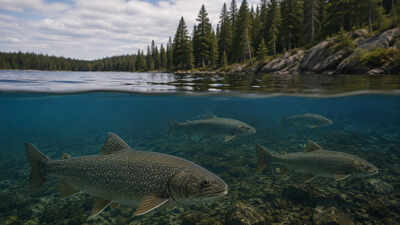
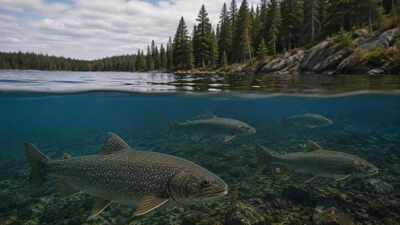
A lake in northwestern Ontario became the setting for a landmark experiment on the effects of acid rain. For 17 years, scientists deliberately added sulfuric acid to Lake 223 every week, gradually changing the water’s chemistry to mimic the effects of acid rain that was damaging lakes across North America and Europe. Between 1976 and 1993, the lake’s pH fell from 6.8 to 5.2 as researchers watched how the changing conditions affected its ecosystem. The experiment ended decades ago, and the lake’s water chemistry has since returned to conditions similar to those that existed before the experiment. But the ecosystem has not recovered at the same pace. According to the International Institute for Sustainable Development’s Experimental Lakes Area (IISD-ELA), the lake trout population remains at less than half its pre-experiment level, and the fish are also growing more slowly.
A lake turned into a laboratory
Lake 223 is part of the IISD Experimental Lakes Area, a collection of 58 lakes and their watersheds in northwestern Ontario that have been set aside for scientific research. Rather than studying individual organisms in a laboratory, researchers can manipulate entire lake ecosystems and observe how different environmental pressures affect everything from water chemistry to fish populations.The acid rain experiment was designed to reproduce the acidity that freshwater ecosystems were experiencing during the 1970s. Sulfuric acid was added to Lake 223 weekly, allowing researchers to gradually increase the acidity rather than creating an abrupt change. Over the course of the experiment, the lake’s pH dropped from 6.8 to 5.2. The resulting changes demonstrated how sensitive freshwater food webs can be to acidification. Several fish and invertebrate species were lost as conditions changed.
Acid rain’s wider impact
At the time, acid rain was a major environmental concern. Sulfur dioxide and nitrogen oxides released mainly by burning fossil fuels can react in the atmosphere to form acids. These compounds can then return to the ground in rain, snow and other forms of precipitation. The problem was particularly significant across parts of eastern North America and northern Europe, where acid precipitation was affecting freshwater ecosystems. Scientists suspected that industrial emissions were contributing to declining fish populations, but evidence from whole-lake experiments helped demonstrate how the process could affect entire food webs.At Lake 223, researchers observed reduced body condition and breeding success in some fish, while fathead minnows nearly disappeared. Lake trout were also affected; changes in their food supply and ecosystem conditions contributed to their decline. The findings helped strengthen the scientific case for controlling industrial emissions. Research from the Experimental Lakes Area contributed to evidence that influenced air-emission regulations in both Canada and the United States.
The chemistry recovered first
One of the most revealing parts of the Lake 223 experiment came after the acid additions stopped. The water itself eventually returned to chemistry similar to its pre-experiment condition. Yet the ecosystem’s living components did not simply return to their previous state. According to IISD-ELA, the lake’s biology has not fully recovered. The lake trout population is now less than half of what it was before the experiment, and the fish’s growth rates are considerably slower than previously. Researchers believe the long-lasting effects are linked in part to changes that occurred lower in the food web. One important example is Mysis diluviana, a small freshwater shrimp-like invertebrate that disappeared from the lake during the acidification experiment.
Trying to restore the food web
Scientists are now using Lake 223 to investigate whether an ecosystem affected by acidification can be actively restored. Beginning in 2019, researchers started reintroducing Mysis diluviana into the lake. By 2021, they had found evidence that a new Mysis population had become established. Researchers are continuing to monitor the consequences, including effects on lake trout growth, survival and mercury concentrations.The experiment therefore has become more than a historical record of acid rain. Lake 223 is now also a long-term test of ecological recovery. Its story shows that restoring water chemistry may not be enough to immediately restore an ecosystem. Even after the original disturbance has ended, changes to food webs and species interactions can persist for decades. For Lake 223, the continuing presence of fewer lake trout is a reminder that the effects of environmental damage can outlast the pollution that caused it.
[ad_2]
Source link