[ad_1]
The spotted lanternfly has become one of the most destructive invasive insects in the United States, threatening vineyards, orchards and forests by feeding on the sap of hundreds of plant species. Finding its egg masses before they hatch is one of the most effective ways to slow its spread, but the eggs are well camouflaged and often overlooked by human searchers. Scientists have now shown that an unexpected group of volunteers could help. In one of the largest participatory detection-dog studies of its kind, researchers trained 182 pet dog-owner teams to recognise spotted lanternfly egg masses. Many of the dogs later demonstrated they could transfer that training to live egg masses, opening the door to a scalable, community-based approach to invasive species management.
Why researchers recruited 182 pet dogs instead of relying only on professional detection teams
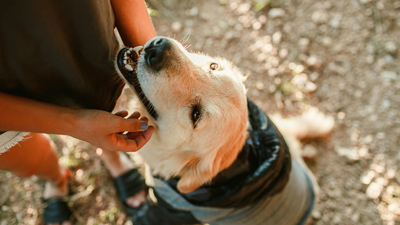
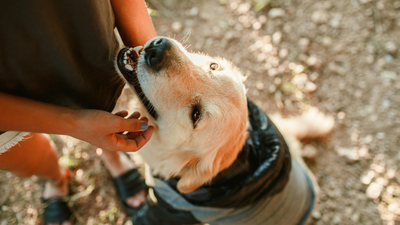
The findings come from the study ‘Evaluating the Effectiveness of Participatory Science Dog Teams to Detect Devitalised Spotted Lanternfly (Lycorma delicatula) Egg Masses’ by Sally Dickinson, Mizuho Nita, Edgar O. Aviles-Rosa, Nathan Hall and Erica N. Feuerbacher of Virginia Tech and Texas Tech University. Rather than using purpose-trained working dogs, the researchers recruited 182 dog-handler teams from across the United States. Most handlers already had experience in scent-detection sports or related activities, and the dogs represented dozens of breeds, ranging from Labrador Retrievers and Border Collies to mixed breeds.

Image: Canva
The teams underwent three to six months of independent training using devitalized (non-viable) spotted lanternfly egg masses under the guidance of experienced trainers. Using devitalized eggs allowed the researchers to avoid the risk of accidentally spreading the invasive insect during training while still exposing dogs to its characteristic scent.
The trained dogs successfully transferred their skills to live egg masses
After completing odour recognition and field evaluations, a subset of successful teams took part in an additional assessment involving live spotted lanternfly egg masses.Remarkably, 92.8% of the participating teams passed this live egg odour recognition test despite having no previous exposure to live egg masses before a brief familiarisation period. The researchers also reported that the dogs maintained a sensitivity of around 80% during the live odour assessment, demonstrating that training with devitalized egg masses could successfully prepare dogs for detecting real infestations. The authors noted that this transition is particularly important because it provides a safe way to train large numbers of dogs without transporting viable eggs that could introduce the pest into new regions.
Community scientists could greatly expand invasive species surveillance
Professional conservation detection dogs have already proven highly effective at locating spotted lanternfly egg masses, but their numbers remain limited.The participatory science approach tested in the study offers a way to dramatically increase detection capacity by involving trained volunteers and their companion dogs. Although not every enrolled team completed the programme, those that did demonstrated that citizen scientists can meet standardised detection criteria and contribute meaningfully to invasive species monitoring.The researchers describe the project as a proof of concept, showing that community dog-handler teams could become a valuable extension of existing surveillance programmes rather than replacing professional detection teams.
A low-cost approach that could help protect agriculture
The spotted lanternfly was first detected in the United States in 2014 and has since become a major threat to vineyards, hops, fruit trees and ornamental plants. Because adults can spread rapidly, locating and removing egg masses before they hatch remains one of the most effective methods of limiting new infestations.According to Dickinson and her colleagues, community-trained detection dogs could provide a scalable, cost-effective and biosecure tool for supporting agricultural agencies and conservation programmes. By combining citizen science with canine scent detection, the approach could enable much earlier identification of infestations while reducing reliance on labour-intensive visual searches.The study highlights an unusual but promising partnership: ordinary pet dogs and their owners may become an important frontline defence against one of North America’s fastest-spreading invasive insects.
[ad_2]
Source link