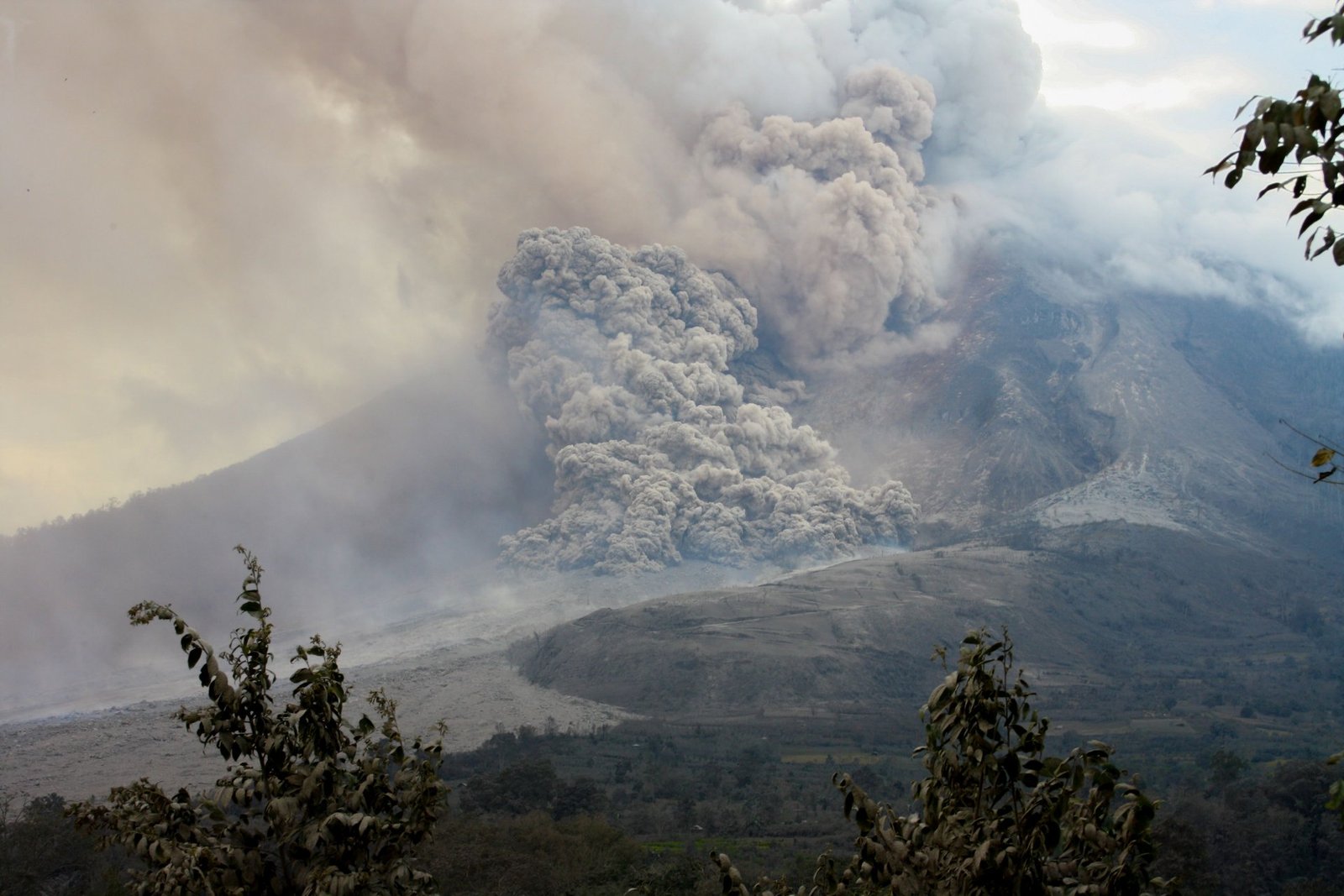
A volcanic eruption in Indonesia has caused significant disruptions, leaving approximately 270,000 passengers stranded as airports remain closed for a second consecutive day. The eruption of Anak Krakatau, situated about 150 kilometers from Jakarta, began late Friday and has continued to affect the region throughout the weekend.
Impact on Air Travel and Local Operations
The eruption has led to the grounding of over 2,000 flights, with key airports including Jakarta’s Soekarno-Hatta International extending their closures until 18:00 local time on Monday. The presence of volcanic ash in the airspace has necessitated these measures, affecting both domestic and international travel plans.
As a result, schools in the affected areas have transitioned to online classes, and some shipping activities have been disrupted. At Soekarno-Hatta International Airport, long queues have formed as passengers seek refunds and updates on their flights.
Passenger Experiences and Alternative Arrangements
Travelers like Finna, who was traveling from Malang to Jakarta, have faced numerous delays and uncertainties. After experiencing repeated flight rescheduling, she opted for a lengthy train journey to reach her destination. Similarly, Jo Shaw from Save the Rhino International expressed concern for field teams working in challenging conditions due to the eruption, while considering her own airport hotel stay a minor inconvenience.
Others, including a newlywed Malaysian couple, faced unexpected delays in their return to Kuala Lumpur, with their next available flight not scheduled until several days later. The couple had only budgeted for their honeymoon, exacerbating their predicament.
Ongoing Volcanic Activity and Safety Measures
The Indonesian Geological Agency has warned of the likelihood of further eruptions, with volcanic ash reaching significant altitudes across Java and Sumatra. Anak Krakatau, located on the Sunda Strait, has a history of activity, having emerged in the early 20th century following the catastrophic 1883 eruption of Mount Krakatoa.
Authorities have issued advisories against approaching the volcano within a 3-kilometer radius and have created an exclusion zone for ships navigating through the Sunda Strait. While there is no current tsunami warning, ongoing monitoring of the situation continues, with airport authorities conducting frequent tests to assess the ash spread.