[ad_1]
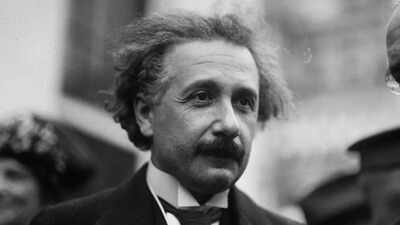
Two people can be told they have no special gift for something and respond in completely different ways. One takes it as a verdict and stops trying. The other decides that gift was never really the point, and keeps going anyway, driven by something that has nothing to do with natural ability. Albert Einstein, whose name has become shorthand for genius itself, insisted the second description fit him better than the first. “I have no special talents. I am only passionately curious,” he said, deliberately trading away the label the whole world had already given him.
Quote of the day by Albert Einstein
“I have no special talents. I am only passionately curious.”
What Albert Einstein actually meant
He was not being falsely modest, and he was not denying that his work required serious intellectual capability. His point was narrower and more specific than that. Talent, in the sense of an innate gift that some people simply have and others don’t, was not, in his own account, the thing driving his best work. What drove it instead was a persistent, almost involuntary need to keep asking questions that most people stop asking once childhood ends.Two people can be equally capable in a technical sense and end up producing very different amounts of original work over a lifetime, because one treats their ability as sufficient and stops actively questioning once they’ve mastered the basics, while the other keeps circling back to the same fundamental questions, refusing to accept an explanation simply because it’s the accepted one. Einstein was not dismissing intelligence as irrelevant. He was reassigning the credit for his own achievements away from a fixed, innate quality and toward an ongoing, active habit that, in his telling, anyone could in principle sustain.
Written by someone whose curiosity outlasted a difficult, unpromising start
What gives this line extra weight is how poorly Einstein’s early life actually matched the image of effortless genius. He was, by several accounts, a slow talker as a young child, struggled with aspects of the rigid, rote educational style of his schooling in Germany, and was rejected on his first attempt to enter the Swiss Federal Polytechnic. After graduating, he could not initially secure an academic position and instead took a job as a patent clerk in Bern, evaluating other people’s inventions for a living rather than pursuing physics from within any university.It was during that period, working outside the traditional academic system entirely, that Einstein produced his 1905 “miracle year” papers, on the photoelectric effect, Brownian motion, special relativity, and mass-energy equivalence, any one of which would have defined most physicists’ careers. He later traced his own scientific curiosity back to childhood, describing his fascination at around age five with a compass his father showed him, transfixed by the idea that an invisible force could move a needle with nothing physically touching it. That single, sustained question, what makes the needle move, arguably outlasted every formal advantage he lacked and eventually outperformed the credentials he didn’t have.
Why this idea keeps coming back
The basic claim in this quote, that sustained curiosity matters more than innate talent in producing exceptional work, echoes throughout later research on expertise and creativity, particularly studies showing that intrinsic motivation, the drive to understand something for its own sake rather than for external reward, is one of the strongest predictors of original, high-quality work across many fields.Einstein was describing, from the perspective of someone the world had already crowned a genius, something researchers studying achievement would later document more formally: that the habit of asking questions persistently tends to outperform any fixed measure of natural ability. That overlap is a large part of why this quote continues to resonate well beyond physics. It is not describing a rare gift reserved for once-in-a-generation minds. It is describing a habit, curiosity sustained past the point most people let it drop, that remains available to anyone willing to keep asking.
A simple way to actually use this idea in daily life
The useful move here is treating a lack of natural aptitude as far less disqualifying than it feels, since sustained curiosity tends to compound over years in a way that an early talent advantage often does not.A fair test is to ask, about a subject that keeps pulling your attention despite no particular gift for it, whether the pull itself is worth taking seriously as a signal. That question won’t manufacture ability overnight. It usually keeps a genuine, sustained interest from being written off simply because it didn’t come with an obvious head start.
Other famous quotes by Albert Einstein
- “Imagination is more important than knowledge. Knowledge is limited. Imagination encircles the world.”
- “The important thing is not to stop questioning.”
- “It’s not that I’m so smart, it’s just that I stay with problems longer.”
[ad_2]
Source link