The Triumph Tracker 400 has recently made its debut in the brand’s 400 series. This motorcycle is powered by a refined version of the 349cc liquid-cooled single-cylinder engine, similar to that found in the Thruxton 400. After spending significant time riding this model, we are pleased to share our findings regarding its fuel economy.
In our practical tests, the Tracker 400 demonstrated a fuel efficiency of 24.1 kilometers per liter (kpl) in urban settings and an impressive 31.7 kpl on highways. Our evaluation began with a highway journey where we covered just over 44 kilometers at consistent speeds between 75 to 80 kilometers per hour (kph). Upon completion, it required 1.4 liters of fuel to fill the tank, resulting in the highway efficiency figure of 31.7 kpl.
Following the highway testing, we took the Tracker 400 through the busy streets of South Mumbai, also covering a distance of around 44 kilometers amidst typical city traffic. This leg of the test demanded an additional 1.83 liters of petrol to refill the tank, yielding a city fuel economy of 24.1 kpl.
Analysis of Fuel Efficiency
The Triumph Tracker 400, while equipped with a slightly more potent engine compared to its counterparts in the 400 lineup (except the Thruxton), offers decent fuel efficiency figures. Its overall mileage averaged out to 27.9 kpl, which translates into a commendable riding range of approximately 360 kilometers before needing to refuel.
This motorcycle’s engine provides sufficient torque to navigate through city traffic in higher gears, though it does necessitate higher revs to achieve swift acceleration. Consequently, this factor can influence the overall fuel consumption. On the highway, the Tracker 400 feels at ease cruising at 80 kph, the legal limit in our testing area, exhibiting no signs of stress. There is adequate power available for overtaking, although drivers may find that downshifting improves acceleration during such maneuvers.
Methodology of Fuel-Efficiency Testing
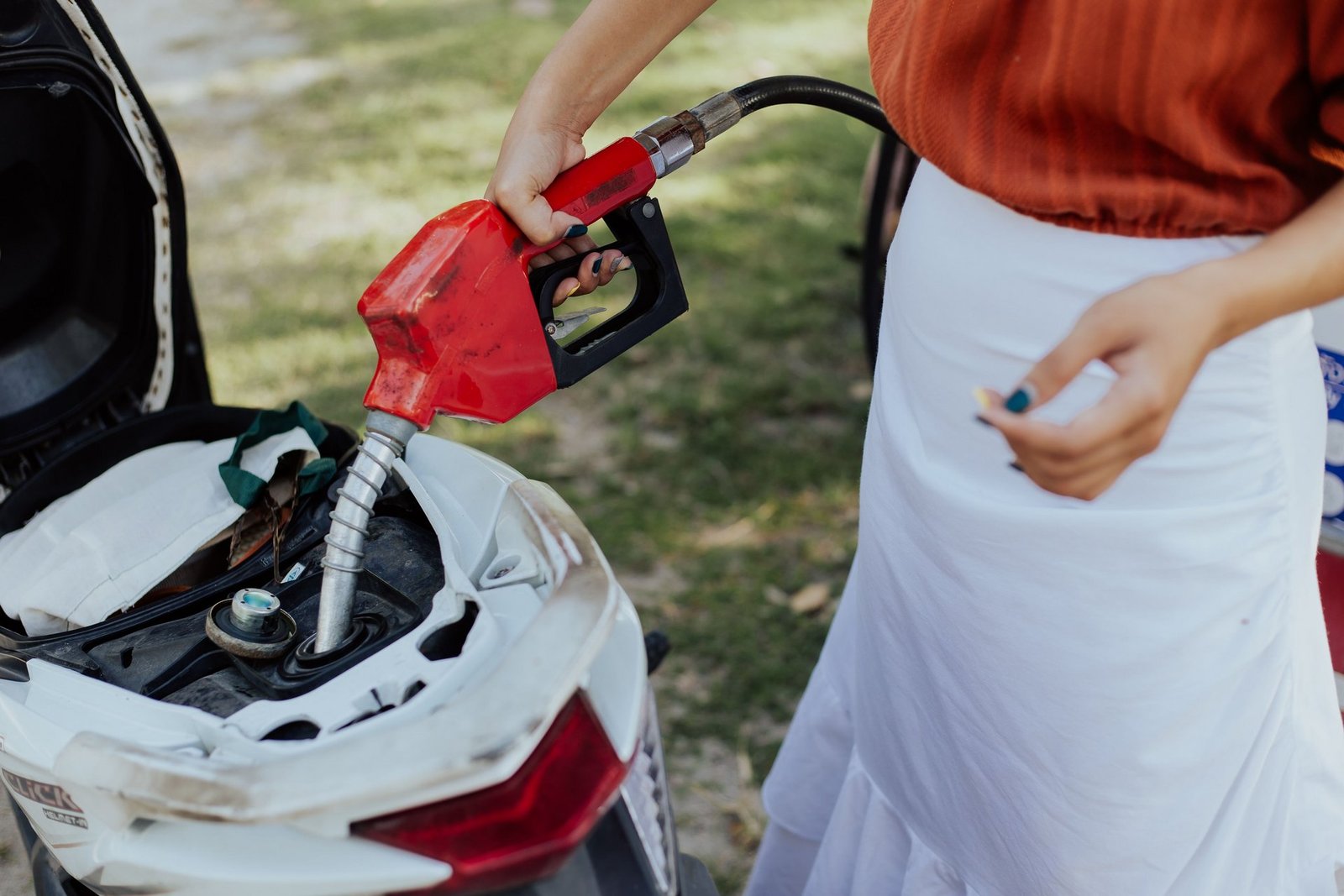
For our fuel-efficiency tests, we began by filling the Tracker 400’s tank to the brim and ensuring that the tire pressures adhered to the manufacturer’s specifications. The bike was then ridden along predetermined city and highway routes, maintaining average speeds that are reflective of real-world driving conditions while observing speed limits.
To standardize the payload across different models, we balanced the rider’s weight with ballast. This consistency allows for more accurate comparisons between various bikes. At the conclusion of each test cycle, we filled the fuel tank again to the brim, providing a precise measurement of fuel consumption against the recorded trip meter data.