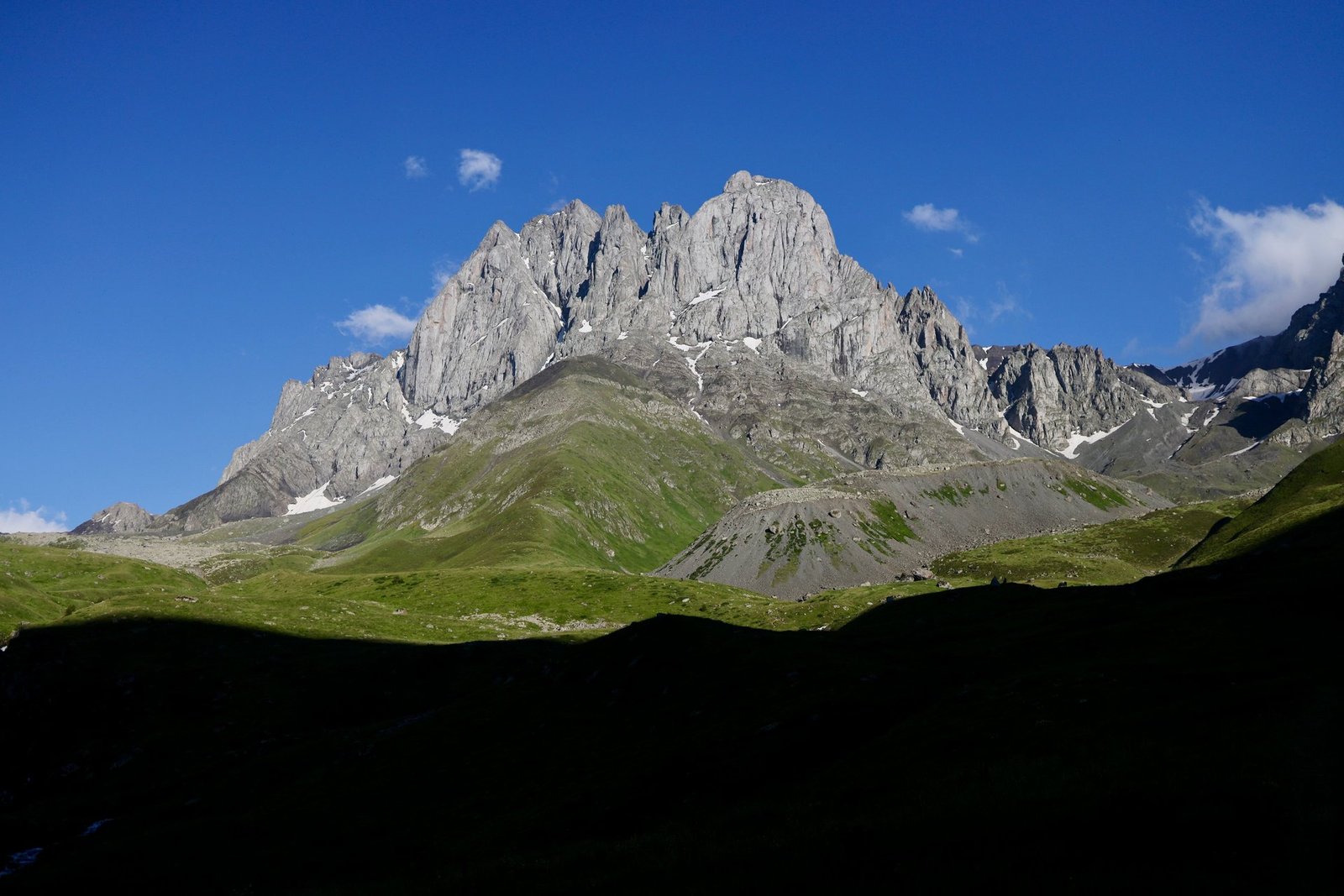
In a striking statement, celebrated Italian mountaineer Reinhold Messner has raised alarms about the rapid melting of glaciers, warning that the majestic peaks of Pakistan’s Gilgit-Baltistan region may not endure for much longer. He emphasized that these towering mountains are far more precious than oil reserves found in the Arab world.
During a recent visit to the mountainous regions of Gilgit-Baltistan, Messner expressed his deep concerns regarding environmental changes. He indicated that without immediate and effective environmental management, some of these iconic “white mountains” could face extinction within the next decade to fifteen years. Messner, along with his team, has committed to taking action to preserve the remaining glacial ice.
The renowned climber celebrated his 82nd birthday in Islamabad, marking the occasion with a 12-day exploration of the mountainous areas alongside his wife, Diane. The highlight of the trip was a birthday celebration hosted by Nanga Parbat Adventure Pakistan at the Serena Hotel in the capital.
Recognition of Messner’s Legacy
The event saw attendance from notable figures such as Ugo Ciarlatani, the Italian Ambassador to Pakistan, and Ina Lepel, the German Ambassador, along with distinguished Pakistani climbers like Nazir Sabir and Liver Khan. They gathered to pay tribute to Messner’s significant contributions to mountaineering and his enduring legacy.
Beyond his accomplishments as a climber, Messner is dedicated to giving back to the community. Liver Khan, a close friend, acknowledged Messner’s strong ties to the local communities that supported him during his perilous descent from Nanga Parbat over five decades ago. Throughout the years, Messner has played a pivotal role in establishing schools in the Diamer valleys, including one named in memory of his late brother, Gunther.
A Personal Journey and Reflection
Messner’s return to Pakistan stirred deep emotional reflections for the iconic climber, who is often celebrated as one of the greatest high-altitude climbers in history. Just days before his birthday, he revisited a rock near Thalichy along the Karakoram Highway, where he first glimpsed Nanga Parbat with his brother in 1970. The memories of that moment are intertwined with both triumph and tragedy.
In 1970, Messner and Gunther successfully reached the summit of Nanga Parbat via the Rupal Face, but disaster struck during their descent down the Diamir side. Gunther was tragically lost to an avalanche, while Messner survived, suffering severe frostbite that resulted in the loss of seven toes. The truth about Gunther’s fate was finally uncovered in 2005 when his remains were discovered on the Diamir Face, validating Messner’s long-held claims about the incident.
Legacy of Resilience and Courage
Despite facing accusations from fellow climbers regarding his brother’s death, Messner continued to push the boundaries of mountaineering. In 1978, he achieved a remarkable feat by summiting Nanga Parbat solo, without supplemental oxygen or support, becoming the first to complete a solo ascent of an 8,000-meter peak.
Reflecting on his connection to Pakistan, Messner expressed on social media, “To return to Pakistan is to return to the roots of my own becoming. Here, at Nanga Parbat, I crossed the mountain and lost my brother Gunther, a wound that has never closed but became part of who I am.” Such sentiments underline the profound impact that this region has had on his life and legacy.