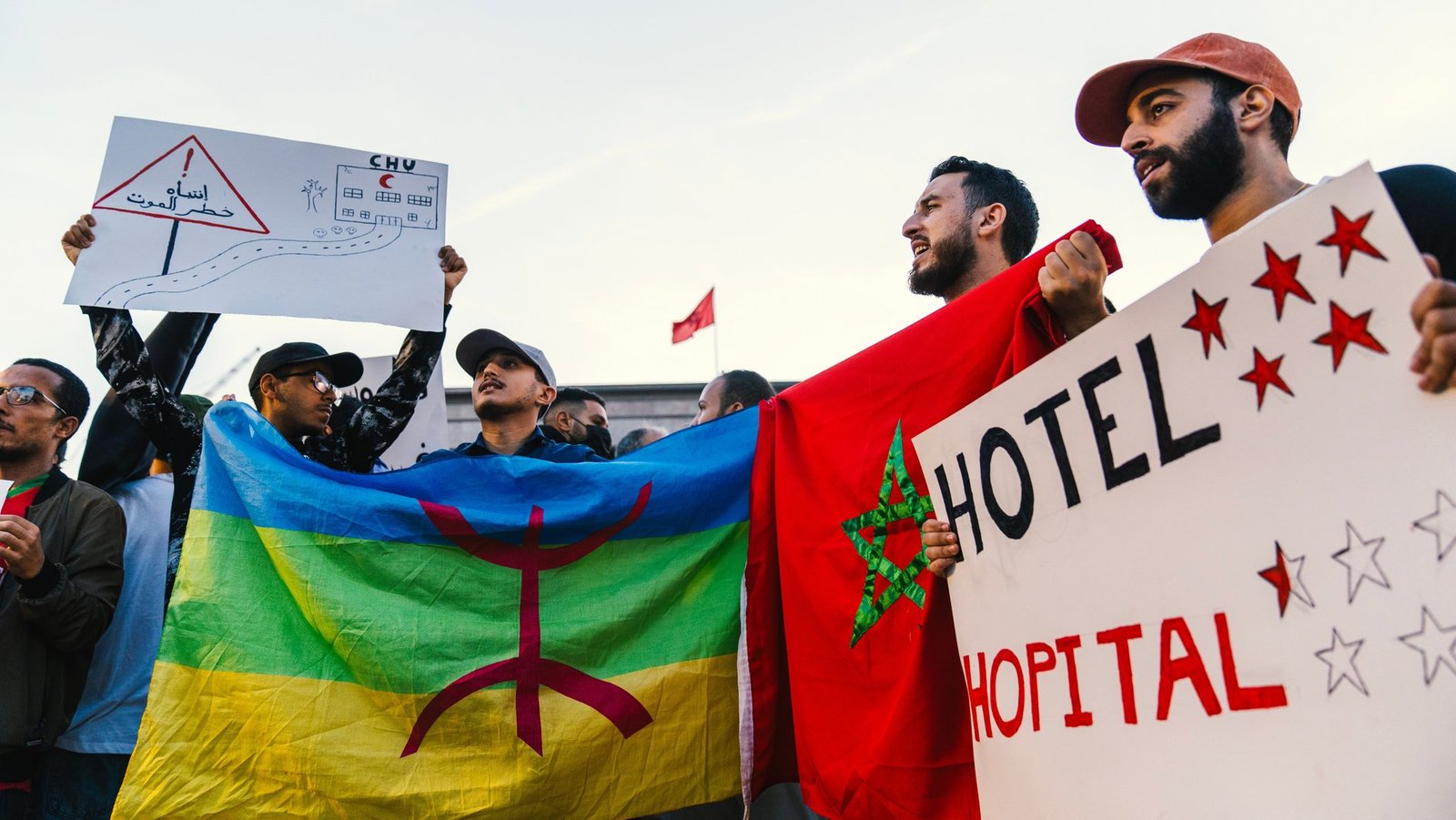
As Morocco prepares for its parliamentary elections, the campaign has been marked by a blend of football fervor, promises of job creation, and contentious relations with Israel. Despite these efforts, many young Moroccans remain skeptical about the political process.
Disillusionment Among Young Voters
In the lead-up to the elections, political parties have attempted to engage young voters through various means, including popular football slogans and pledges to create a million jobs. However, there is a pervasive sense of disconnection from politics among the youth. Siham Azeroual, an environmental activist from the Atlas region, expressed her disillusionment, describing the political scene as “a complete circus.”
The election results will determine the composition of the government, which operates under a constitutional monarchy. While political parties vie for seats in the House of Representatives, ultimate executive power remains with the monarchy. King Mohammed VI appoints the prime minister from the winning party and presides over the Council of Ministers, the country’s chief policy-making body.
Unemployment and Economic Hardship
The campaign comes on the heels of widespread protests by Gen Z over issues such as unemployment, healthcare, and living costs. These demonstrations, which began in September 2025, voiced demands for “freedom, dignity, and social justice,” and called for the resignation of Prime Minister Aziz Akhannouch. Despite a crackdown that led to over 2,400 prosecutions, some young activists, like Hamza El Kharroubi, are seeking to enter politics to enact change.
El Kharroubi, who was briefly detained during the protests, is running for parliament with the Environment and Sustainable Development Party. He cites economic hardship and high unemployment as key factors driving mass migrations, including the recent crossing of 60,000 people to Ceuta. The IMF reported a 13% overall unemployment rate last year, with youth unemployment at 37.3%.
Football’s Role in Politics
Fouzi Lekjaa, head of the Royal Moroccan Football Federation, has become a political figure to watch. His involvement in the centrist Party of Authenticity and Modernity (Pam) has energized the campaign, with his rallies resonating with Morocco’s football-obsessed population. Lekjaa’s promises to improve education and healthcare to align with the national football team’s FIFA ranking have captured public attention.
Meanwhile, the ruling National Rally of Independents (RNI) is campaigning for a second term, renewing its commitment to creating one million jobs by 2031. However, political analyst Rachid Aourraz remains doubtful about the feasibility of such promises, citing structural economic challenges.
Impact of Israel Relations
The Islamist Justice and Development Party (PJD) is attempting a political resurgence by capitalizing on anti-Israel sentiments. Morocco’s normalization of ties with Israel in December 2020 has been a contentious issue, with the PJD pledging to sever diplomatic relations. Former Prime Minister Abdelilah Benkirane leads this charge, criticizing the normalization as a “mistake.”
Despite significant protests against Israel during the Gaza war, Morocco and Israel have agreed to open embassies, following diplomatic discussions involving the United States. Benkirane believes that public opposition could influence the monarchy to reconsider these diplomatic ties.
Youth Participation and Future Prospects
With over half of Morocco’s population under 35, youth participation in elections is crucial. However, only a small fraction of registered voters are aged 18 to 24. The Gen Z protests, particularly among the diaspora, have sparked discussions and debates about the role of young people in politics.
Despite her skepticism, activist Siham Azeroual plans to vote, advocating for grassroots community building as a path to meaningful change. She believes that focusing on local initiatives could eventually lead to broader political transformation.